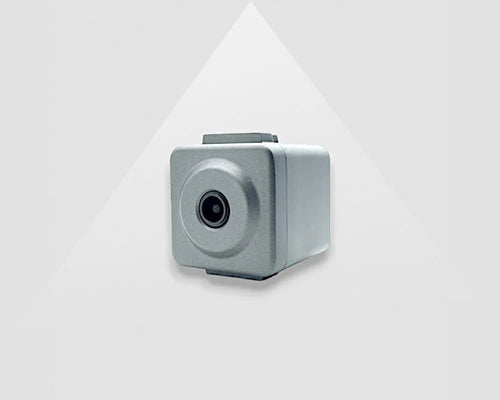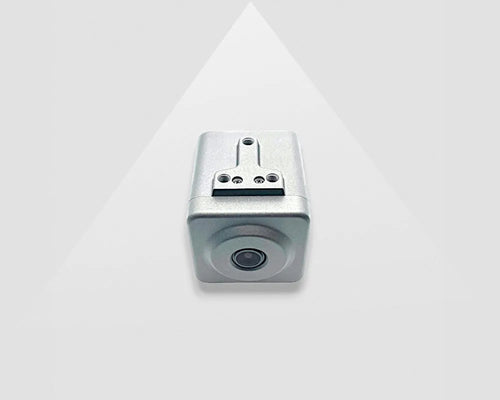
An industrial IP camera is a camera that transmits video over an Ethernet network, making it suitable for applications that require stable communication, flexible installation and reliable remote video access.
Unlike USB or board-level cameras that depend on a direct connection to a host device, IP cameras are built for network-based integration. They can be installed over longer distances, connected through standard Ethernet infrastructure and accessed remotely through common protocols and web-based tools. This makes them especially relevant for industrial systems, OEM devices, process monitoring and project-based installations where the camera must function as part of a broader technical system.
At VA Imaging, industrial IP cameras are intended for professional applications where long-term availability, integration stability and practical deployment matter more than consumer-oriented features.
Industrial IP cameras are often selected when the application needs more than simple video monitoring. In many technical environments, the camera is one part of a larger system that must remain stable over time and fit into existing infrastructure without creating unnecessary integration complexity.
Compared with many commercial IP cameras, industrial IP cameras are generally better suited to long-term system integration, OEM and embedded projects, controlled technical installations, remote access over Ethernet and applications where compatibility with standard network protocols is important. Support for web-based configuration, ONVIF, RTSP, PoE and compression formats such as H.264, H.265 and MJPEG can make deployment more practical in industrial and project-based environments.
VA Imaging industrial IP cameras are designed for integration into professional systems where stable performance, long-term availability and technical compatibility are important. Rather than focusing on short consumer product cycles, our industrial camera portfolio is aimed at customers who need dependable hardware for OEM, embedded and industrial projects.
Depending on project needs, industrial IP cameras may also be a better fit when customers require Ethernet-based installation, remote viewing, easier integration into existing network environments, compatibility with third-party software or video management systems, reduced cabling complexity through PoE and customization possibilities for larger-volume projects.
One of the main reasons for choosing an industrial IP camera is that it can fit naturally into Ethernet-based environments. Because IP cameras communicate over a network, they can be integrated into existing infrastructure more easily than interfaces that require direct host connection. Web-based access can simplify setup and configuration, while ONVIF and RTSP support can help connect the camera to software platforms, monitoring systems and other third-party environments.
PoE can also simplify installation by allowing both power and data to run over a single Ethernet cable. In practice, that can reduce cabling effort and make camera placement more flexible in industrial or distributed installations. If you are comparing Ethernet-based video with USB-based alternatives, see our UVC vs IP camera guide.
Commercial IP cameras are usually developed for general surveillance markets and shorter product cycles. In many cases, they are suitable for standard security installations, but they are not always optimized for technical integration, lifecycle consistency or OEM-style deployment.
Industrial IP cameras are generally a better fit when the application requires long-term product availability, stable integration into a technical system, consistent supply for project rollouts, compatibility with industrial or OEM workflows and room for project-based adaptation. This distinction matters when the camera is not just being installed for viewing, but is becoming part of a machine, device, monitoring platform, or specialized industrial environment.
An industrial IP camera and an industrial UVC camera serve different system architectures. An IP camera is typically the better choice when the system benefits from network-based video, longer cable runs, remote access, or easier installation into existing Ethernet infrastructure. A UVC camera is often the better fit when the priority is direct USB integration, plug-and-play compatibility and fast host-side setup on supported platforms.
In practical terms, choose an industrial IP camera when you need Ethernet-based installation, remote viewing, longer cable distances, easier network integration, or distributed camera placement. Choose an industrial UVC cameras solution when you need direct USB connection, simpler plug-and-play integration, broad host compatibility, or fast prototyping and development setup.
The right industrial IP camera depends on how the final system is designed. Beyond resolution alone, it is important to evaluate the factors that affect integration, image transmission, installation and long-term fit.
Industrial IP cameras are suitable for a wide range of professional applications where network-based video and reliable integration are important. Typical applications include industrial monitoring, process observation, remote inspection, distributed camera installations, embedded and OEM systems, machine and equipment monitoring and network-based video access.
These applications often benefit from the combination of Ethernet connectivity, remote accessibility and practical integration into larger systems. For users still evaluating broader interface options, our industrial streaming cameras page compares IP, MIPI CSI-2 and UVC approaches for live video integration.
The best industrial IP camera depends on the application, system architecture and installation environment. If the priority is network-based video, longer cable distances and remote accessibility, an IP camera is often the strongest option. If the system instead depends on direct USB connectivity or embedded board-level integration, another streaming camera interface such as UVC or MIPI CSI-2 may be more appropriate.
For customers comparing interface options, the most useful starting point is usually not the camera alone, but the final system requirement. Do you need Ethernet-based infrastructure, remote access, longer cabling, plug-and-play USB, or compact embedded integration? If you are still comparing interfaces, explore our industrial streaming cameras collection for a broader overview.
I am absolutely thrilled with the MER2-160-227U3M camera I purchased from VA-Imaging. The camera exceeds my expectations in every way. The image quality is sharp and clear, even with fast movements. Installation was straightforward. VA-Imaging's customer service was also outstanding. They were very helpful in answering my questions and delivered the camera quickly and securely.
The cameras are a great value for money and the lenses also. The software is outdated and needs refreshing. It took me considerable amount of time to discover how to access the camera features.
Its a pleasure to contact with the sales department. They are very polite and always ready to help. Our orders are always delivered on time and the communication is easy and simple. High quality products.
We initially explored several embedded vision camera and USB3 camera options for our application. Our main priorities were compact dimensions and keeping the required software development to a minimum. We selected a VEN-161 boardlevel camera. It was easy to integrate and USB3 Vision interface allowed our software team to get started quickly. The sales guy was very helpful with selecting the hardware for us. We are happy that we selected the USB3 board-level camera instead of a Mipi embedded vision camera as we didn't require now the additional driver development.
It was easy and quick process from ordering to receiving. One personal message from the team is making it even better. Thanks
In the commercial phase we had maximum support and delivery times were respected. The material is quite good with low and competitive costs.
Most common questions are already answered on our FAQ page. Questions about delivery times, warranty, loan, returns, longevity, manuals etc.
Image processing software captures the images from an industrial camera and performs complex image processing tasks like segmentation, detection, code and text reading.
We share our machine vision knowledge in our knowledge center. Find tutorials how to connect cameras, install software & program I/O.
Check how our customers use our industrial cameras, lenses and lighting in their application
Ask our machine vision experts! We answer rapidly and think along with your imaging project.
The download page provides access to product documentation, software, drivers, manuals and technical resources for industrial cameras and machine vision components.