

Sistemas de Câmera SWIR para Triagem de Plástico PET
 Max Reijngoudt
Câmaras de infravermelho de onda curta (SWIR) oferecem uma vantagem significativa na triagem de plástico PET, ultrapassando os métodos tradicionais em precisão e eficiência. A tecnologia SWIR utiliza o espectro do infravermelho próximo para penetrar nos materiais e identificar a sua composição química, permitindo a separação precisa do plástico PET dos contaminantes.

- Disclaimer: This article uses PET plastic case as an example, but the guidelines apply to all SWIR-based plastic identification and sorting systems.
Efficient PET plastic sorting is an essential step in recycling workflows, and traditional approaches, such as manual inspection and near-infrared (NIR) imaging, have well-documented limitations.
Manual sorting is slow and prone to human error, and NIR cameras may struggle to distinguish between plastics with similar optical characteristics. These constraints have encouraged the exploration of alternative technologies that can improve accuracy and consistency in material identification.
- Short-wave infrared (SWIR) cameras offer one such option. SWIR imaging operates at different wavelengths than NIR, allowing it to detect material properties that are not visible in standard inspection systems. In the context of PET sorting, SWIR technology can contribute to:
Enhanced Material Detection
SWIR wavelengths capture chemical and structural information, allowing PET to be distinguished from visually similar plastics.
Consistent Performance
Sorting remains reliable even with variations in color, lighting, or surface contamination, supporting faster processing.
Menor Contaminação
Precise identification reduces non-PET impurities, producing cleaner recycled PET.
Versatile Use
SWIR can detect different plastic types, making it suitable for a wider range of recycling applications.
Aplicações de sistemas de câmeras SWIR para a triagem de plásticos PET
Os sistemas de câmeras SWIR têm uma vasta gama de aplicações na triagem de plástico PET, incluindo:
Ao implementar sistemas de câmeras SWIR, as instalações de reciclagem podem melhorar a sua eficiência global, reduzir custos e produzir plástico PET reciclado de maior qualidade.
Machine Vision Camera for Plastic Sorting
Selecionar o sistema de imagem adequado é essencial para uma separação eficaz de plásticos PET utilizando tecnologia SWIR.
Esta tecnologia funciona através da análise das assinaturas espectrais de diferentes plásticos, permitindo ao sistema distinguir com precisão entre materiais que podem parecer semelhantes ao olho humano. Capta imagens precisas de plásticos em movimento, assegurando um desfoque e distorção mínimos devido ao movimento, o que é fundamental para processos de separação de alta velocidade.
Adicionalmente, funcionalidades como o arrefecimento termoelétrico ajudam a reduzir o ruído e a manter uma qualidade de imagem consistente, mesmo em ambientes exigentes.
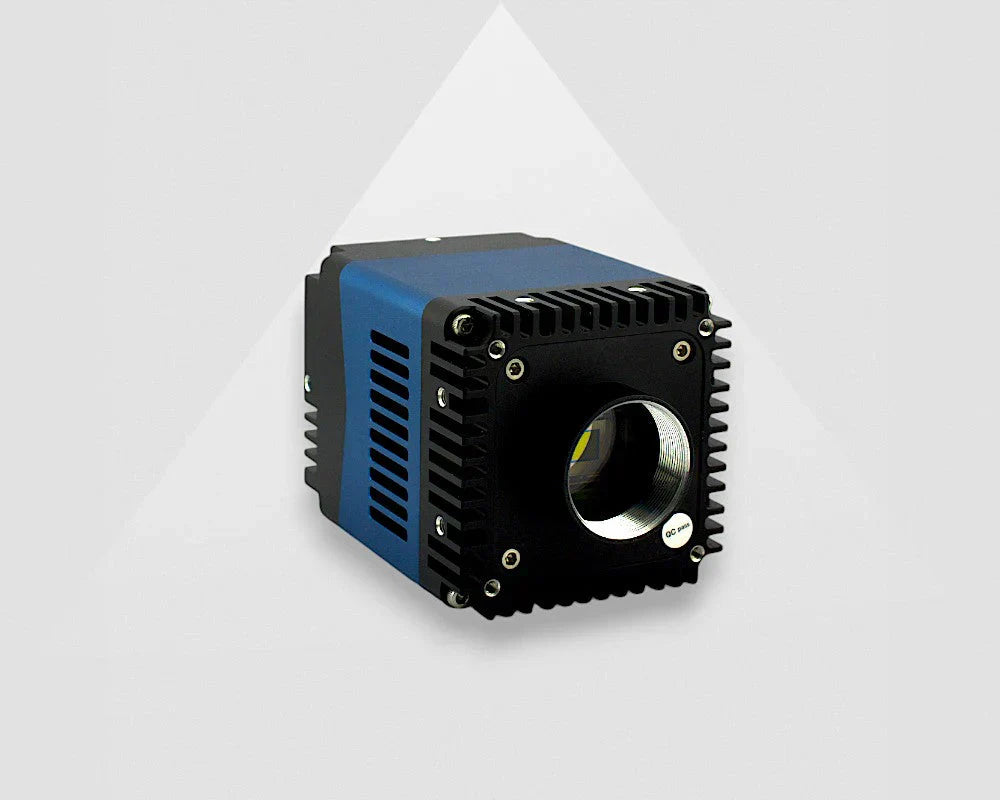
- Para esta aplicação, recomendamos a câmera MARS-138-95GM-P-TN-SWIR.
Technical Specifications
| Interface | GigE Vision |
| Resolution | 1280x1024 |
| Shutter type | Global Shutter |
| Color/Monochrome | Mono SWIR |
| Frame rate (fps) | 95 |
| Pixel size (um) | 5.0 |


Industrial Lens for Plastic Sorting
Choosing the right SWIR lens is crucial for enhancing the performance of machine vision systems in plastic sorting.
The lens determines how clearly and accurately materials are captured, influencing the system’s ability to reliably distinguish between different types of plastics. Factors such as optical distortion, focal length, and spectral sensitivity all contribute to consistent and precise identification, even in challenging lighting conditions or when materials have similar appearances.
- For this application, we recommend a SWIR lens, specifically the C-Mount 25mm lens 'VA-LCM-1.3MP-25MM-F1.8-020-SWIR'.
Technical Specifications
| Resolution (megapixel) | 1 |
| Mount | C |
| Image format / circle | 1/2" |
| Minimum object distance (MOD) - Max | 100mm - 5000mm |
| Focal length (mm) | 25 |
| Aperture / iris | Manual iris |
| Aperture (min) | F1.8 |


Industrial Lighting for Plastic Sorting
Proper illumination is critical for SWIR machine vision in industrial plastic sorting. SWIR lighting enhances contrast based on the spectral absorption and reflectance of different polymers, enabling reliable differentiation that visible-light systems cannot achieve.
- For this application, we recommend two options: SWIR Ring Light or SWIR Bar Light.
SWIR ring and bar lights provide different illumination geometries: ring lights offer uniform, lens-centered lighting for small or curved plastics, while bar lights give wide, directional coverage for high-speed conveyors. Each has trade-offs in coverage, intensity, and integration.
Below, you can compare detailed information about the SWIR Ring Light and SWIR Bar Light.
SWIR RING LIGHT APPLICATIONS
Aplicações de Luz de Anel SWIR:
- Identificação de objetos plásticos curvos (garrafas, recipientes arredondados).
- Tarefas de inspeção a curta distância com geometria consistente.
- Diferenciação de materiais em tapetes transportadores pequenos ou médios.
- Sistemas onde se prefere iluminação centrada na lente para maior precisão.
Aplicações de Luz de Barra SWIR:
- Tapetes transportadores largos com fluxos mistos de resíduos plásticos.
- Triagem em alta velocidade onde são necessários tempos de exposição curtos.
- Deteção de diferentes tipos de plástico em superfícies planas ou semi-planas.
- Sistemas de triagem de grande escala que requerem cobertura de iluminação ampla.
Industrial Lighting Guide


SWIR Ring Light


SWIR Bar Light
Processamento de Imagem para Triagem de Plásticos
O processamento de imagem desempenha um papel crucial na extração de informações valiosas das imagens SWIR captadas pelo sistema de câmera. O software de computer vision selecionado deve ser capaz de lidar com dados SWIR, realizar tarefas de análise de imagem e integrar-se com outros componentes do sistema de triagem.
A câmera MARS-138-95GM-P-TN-SWIR é compatível com GenICam, garantindo integração perfeita com várias plataformas de software de processamento de imagem. Esta flexibilidade permite aos utilizadores escolher o software que melhor se adapta às suas necessidades e experiência.
As opções populares para processamento de imagem em triagem de plásticos baseada em SWIR incluem:
- MvTec Halcon: Uma poderosa plataforma de software com uma vasta gama de ferramentas de processamento de imagem e machine vision.
- Cognex Vision Pro: Uma plataforma de software especializada para tarefas de machine vision.
- MATLAB e OpenCV: Linguagens de programação e bibliotecas populares com amplas capacidades de processamento de imagem.
- Zebra Aurora Vision: Uma plataforma de software abrangente para aplicações de machine vision, incluindo processamento de imagem, deteção de objetos e classificação.
Para além destas opções comerciais, também podem ser utilizados software e bibliotecas open-source para processamento de imagem em triagem de plásticos baseada em SWIR. Estas ferramentas oferecem flexibilidade e personalização, mas podem exigir mais conhecimentos de programação.
Oferecemos um Software Development Kit (SDK) gratuito. Este kit prático ajuda-o a capturar imagens e a controlar parâmetros da câmera, sendo um excelente ponto de partida. O SDK é compatível com várias plataformas, desde PCs convencionais até ambientes industriais com dispositivos NVIDIA TX series ou Raspberry Pi. Suporta ainda diversos sistemas operativos como Windows, Linux e Android.
Ao selecionar o software de processamento de imagem adequado, os utilizadores podem analisar eficazmente imagens SWIR, identificar materiais plásticos e otimizar o processo de triagem.
Suporte para Sistemas de Câmera SWIR para Triagem de Plástico PET
Gostaria de obter suporte de um dos nossos especialistas em machine vision para criar o seu próprio sistema de Separação de Plástico PET com tecnologia SWIR? Ou outro sistema de visão semelhante? Não hesite em contactar-nos através do formulário abaixo!
These Go Well Together

MARS-138-95GM-P-TN-SWIR, IMX990, 1280x1024, UTILIZAÇÃO DUPLA X061 NL0074CDIU0179833, 95fps, 1/2 inch, Global shutter, CMOS, Mono

VA-LCM-1.3MP-25MM-F1.8-020-SWIR, LENTE SWIR C-mount 1.3MP 25MM F1.8 1/2 polegadas VISÍVEL SWIR

Série SWIR Ring luz VA-SWIR-RL, Selecione o seu tamanho / comprimento de onda, Iluminação industrial