
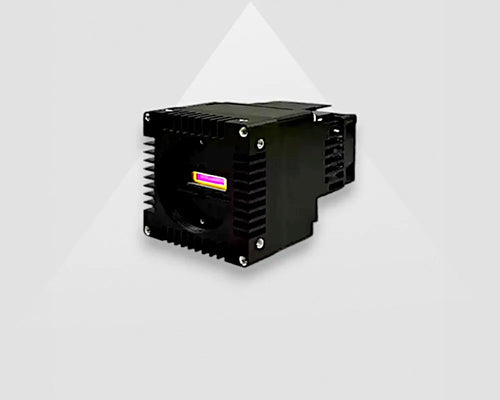

SWIR cameras provide imaging beyond the visible spectrum, making them particularly useful when conventional machine vision cameras cannot reveal enough information about a material or object. VA Imaging offers SWIR and Visible-SWIR cameras for industrial imaging, automation and research applications across the United Kingdom.
Available camera configurations vary by sensor, resolution, acquisition speed and industrial interface. VA Imaging supports customers throughout the United Kingdom with the selection of SWIR cameras, compatible lenses, illumination and other industrial machine vision cameras. Current UK prices are displayed in pounds sterling on each product.
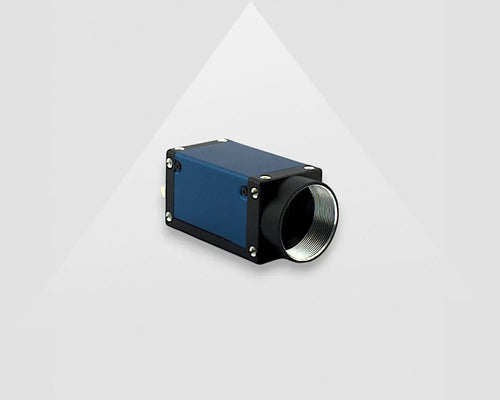
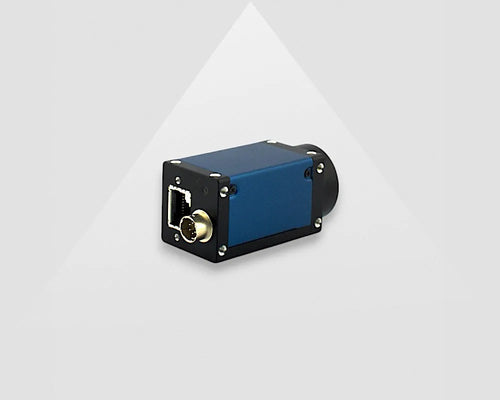
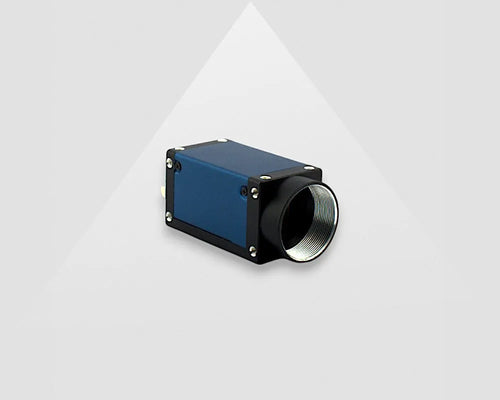
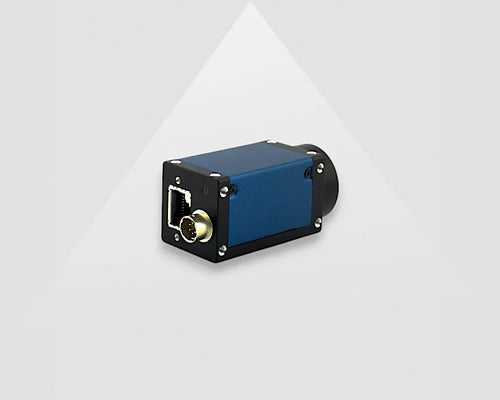
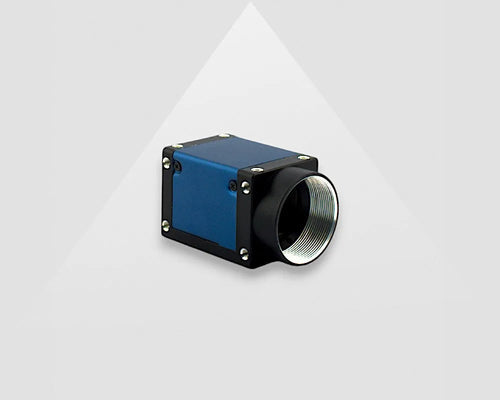
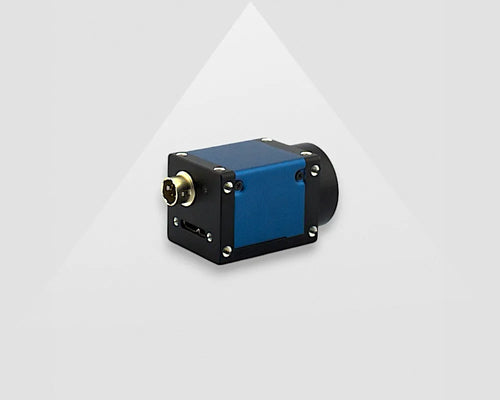
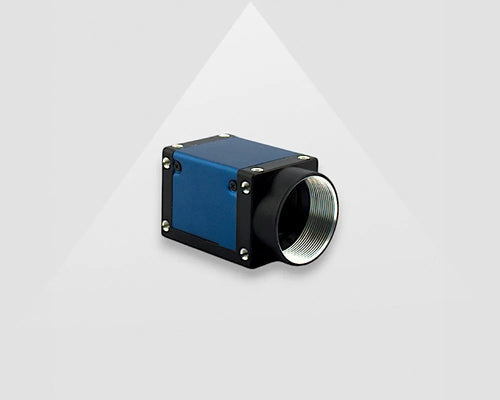
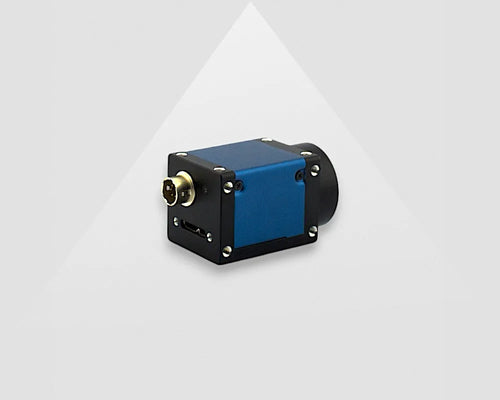
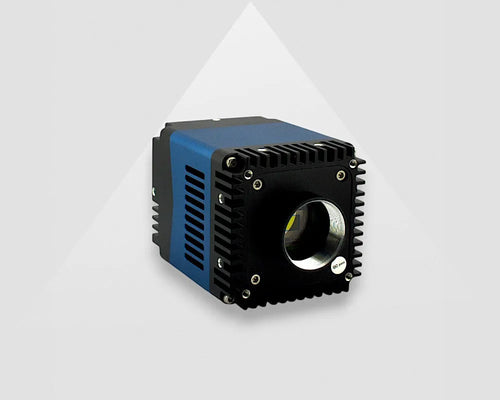
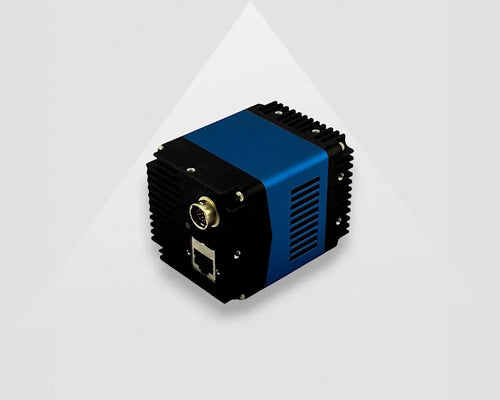


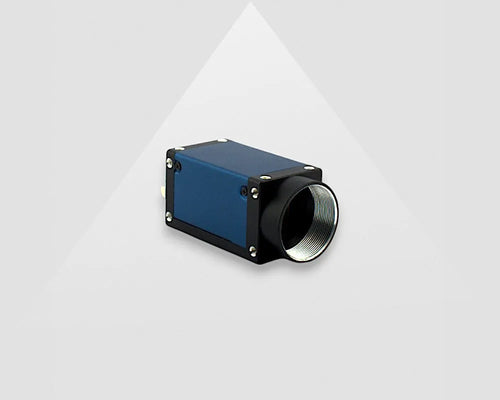
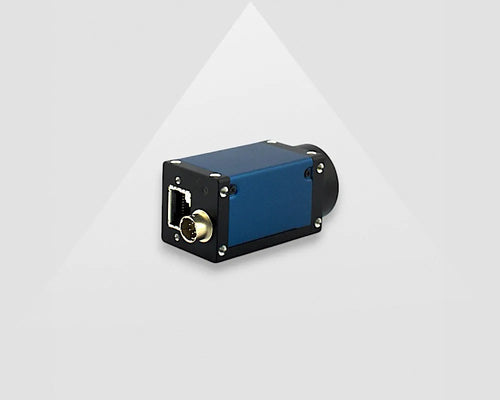


Choosing a SWIR camera starts with the material, defect or feature that the imaging system needs to detect.
Before comparing individual cameras, consider:
This is particularly important with short-wave infrared imaging because the camera alone does not determine whether useful contrast can be achieved. Wavelength, optics and illumination must work together.
Explore our machine vision applications and solutions for more examples of industrial imaging system design.
SWIR, or short-wave infrared, generally covers wavelengths of approximately 900 to 2500 nm. Many industrial InGaAs SWIR cameras operate across a narrower part of this spectrum, commonly extending to around 1700 nm.
This distinction matters when selecting a SWIR camera sensor. A camera described as SWIR does not automatically detect the complete SWIR spectrum.
Different materials absorb, reflect and transmit different wavelengths. The useful spectral range should therefore be chosen according to the feature or material property that needs to be detected.
InGaAs is widely used for industrial SWIR imaging because it extends sensitivity beyond the useful range of conventional silicon-based visible image sensors.
Visible-SWIR sensor technology extends sensitivity towards visible wavelengths as well, allowing visible and short-wave infrared information to be captured with one camera.
VA Imaging offers camera configurations using Sony SenSWIR sensors with different resolutions and pixel sizes. The appropriate sensor depends on field of view, required image detail, acquisition speed and optical setup.
Extended SWIR, or eSWIR, refers to imaging beyond the wavelength range typically covered by standard InGaAs SWIR cameras.
While many conventional InGaAs cameras extend to around 1700 nm, specialised detector technologies can provide sensitivity farther into the SWIR spectrum.
An eSWIR camera is not automatically the better choice. If the required contrast occurs within the standard InGaAs range, a conventional SWIR or Visible-SWIR camera may provide the more practical imaging solution.
Always compare the spectral response of the camera with the wavelength requirements of the application.
A cooled SWIR camera uses active temperature control to stabilise the image sensor and can be beneficial for applications involving longer exposure times or relatively weak optical signals.
Thermoelectric cooling, often referred to as TEC cooling, can help control temperature-dependent sensor behaviour. This can become particularly important when image quality depends on minimising sensor-related noise.
Cooling may be worth considering when:
For fast industrial inspections using strong illumination and short exposures, active cooling may be less important.
For low-signal applications, specifications such as dark current, read noise, dynamic range and exposure time can therefore be just as important as resolution.
SWIR camera applications are valuable when material differences cannot be separated reliably using visible-light imaging alone.
A SWIR lens must transmit and focus the wavelengths required by the imaging application.
A conventional machine vision lens designed mainly for visible wavelengths may not provide the same transmission or focus performance in the SWIR range.
For Visible-SWIR systems, the lens must also perform across a broader spectral range.
Explore our SWIR lenses for industrial cameras when selecting optics for a SWIR imaging system.
Important lens-selection factors include:
The lens and camera should be selected together rather than as independent components.
SWIR illumination can have as much influence on image contrast as the camera itself.
Different materials respond differently to different wavelengths. Selecting illumination around a useful absorption or reflection characteristic can reveal features that remain difficult to distinguish under broadband or visible illumination.
Narrowband illumination can target a specific SWIR wavelength, while broadband illumination provides a wider spectral range.
Explore our machine vision lighting when designing the illumination setup for your application.
SWIR camera prices in the United Kingdom depend on the sensor, resolution, acquisition speed, cooling, camera format and interface.
SWIR cameras generally cost more than conventional visible-light industrial cameras because short-wave infrared imaging requires specialised detector technology. SWIR-compatible optics and illumination may also contribute to the total cost of the imaging system.
Current UK prices are displayed in pounds sterling on each SWIR camera product, allowing models to be compared together with their specifications.


When buying a SWIR camera in the United Kingdom, start with the wavelength and imaging requirement rather than choosing a camera based only on price or megapixel count.
Define what the system needs to detect, determine the wavelength range that creates useful contrast and then compare the available sensor, resolution, speed, cooling and interface options.
VA Imaging supplies SWIR cameras, compatible SWIR lenses, machine vision lighting and related imaging components to customers throughout the United Kingdom.
If you need support specifying your imaging system, contact VA Imaging in the United Kingdom for help selecting the camera and compatible components.
I am absolutely thrilled with the MER2-160-227U3M camera I purchased from VA-Imaging. The camera exceeds my expectations in every way. The image quality is sharp and clear, even with fast movements. Installation was straightforward. VA-Imaging's customer service was also outstanding. They were very helpful in answering my questions and delivered the camera quickly and securely.
The cameras are a great value for money and the lenses also. The software is outdated and needs refreshing. It took me considerable amount of time to discover how to access the camera features.
Its a pleasure to contact with the sales department. They are very polite and always ready to help. Our orders are always delivered on time and the communication is easy and simple. High quality products.
We initially explored several embedded vision camera and USB3 camera options for our application. Our main priorities were compact dimensions and keeping the required software development to a minimum. We selected a VEN-161 boardlevel camera. It was easy to integrate and USB3 Vision interface allowed our software team to get started quickly. The sales guy was very helpful with selecting the hardware for us. We are happy that we selected the USB3 board-level camera instead of a Mipi embedded vision camera as we didn't require now the additional driver development.
It was easy and quick process from ordering to receiving. One personal message from the team is making it even better. Thanks
In the commercial phase we had maximum support and delivery times were respected. The material is quite good with low and competitive costs.
Most common questions are already answered on our FAQ page. Questions about delivery times, warranty, loan, returns, longevity, manuals etc.
Image processing software captures the images from an industrial camera and performs complex image processing tasks like segmentation, detection, code and text reading.
We share our machine vision knowledge in our knowledge center. Find tutorials how to connect cameras, install software & program I/O.
Check how our customers use our industrial cameras, lenses and lighting in their application
Ask our machine vision experts! We answer rapidly and think along with your imaging project.
The download page provides access to product documentation, software, drivers, manuals and technical resources for industrial cameras and machine vision components.