
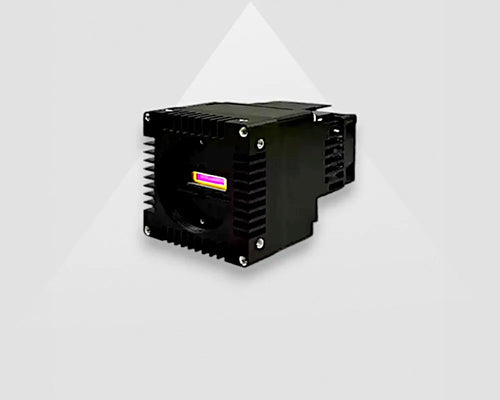

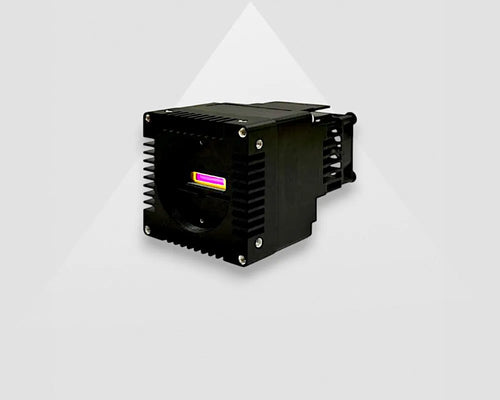
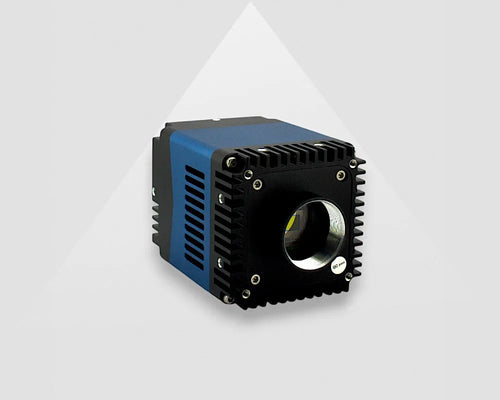
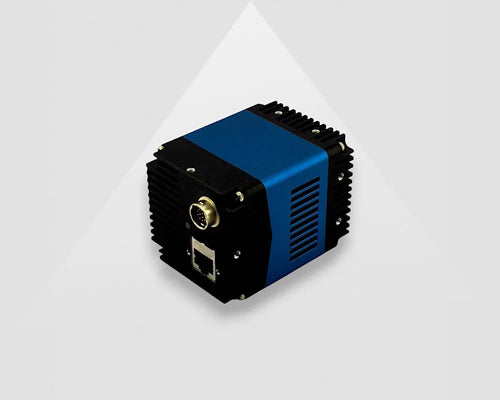
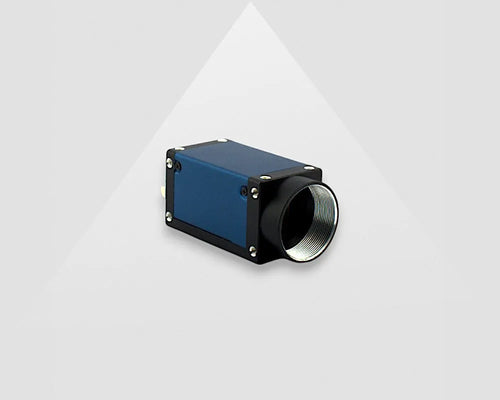
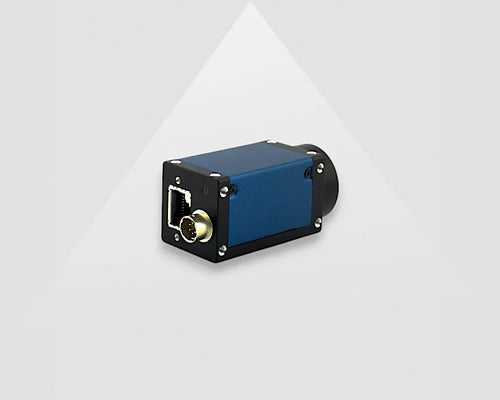
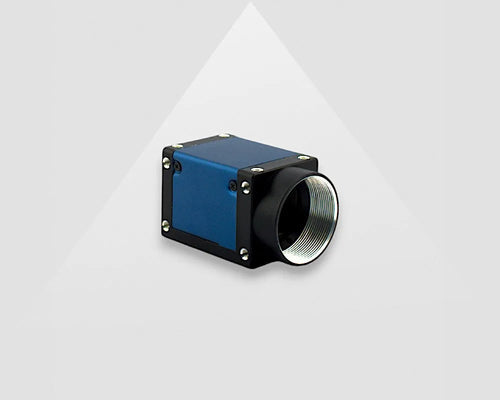
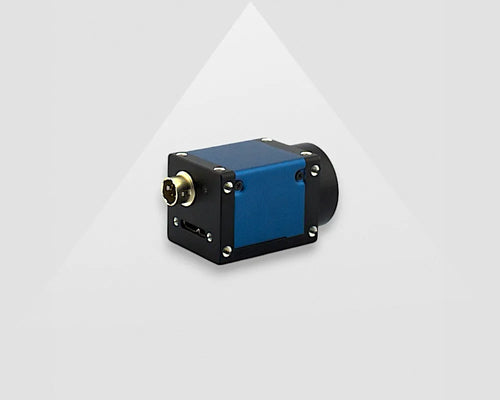
SWIR cameras reveal optical and material information beyond the visible spectrum, making them useful when a conventional machine vision camera cannot provide enough contrast for reliable inspection. VA Imaging supplies SWIR and Visible-SWIR cameras for industrial imaging, automation and research projects across Canada.
VA Imaging supports Canadian machine vision projects with industrial machine vision cameras, machine vision lenses and industrial machine vision lighting. These components can be combined when developing a complete SWIR imaging system for industrial or research applications.
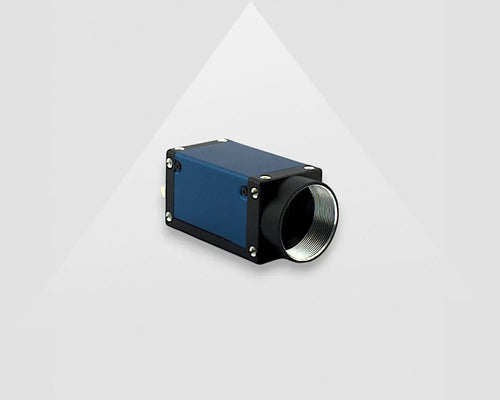
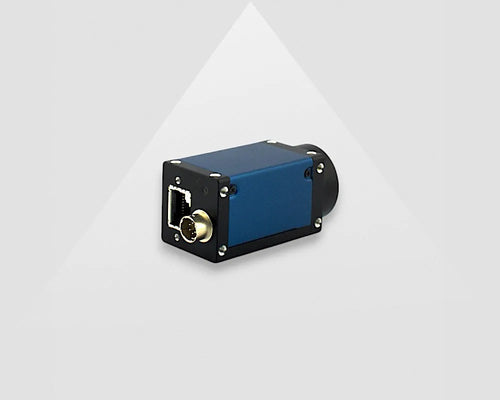
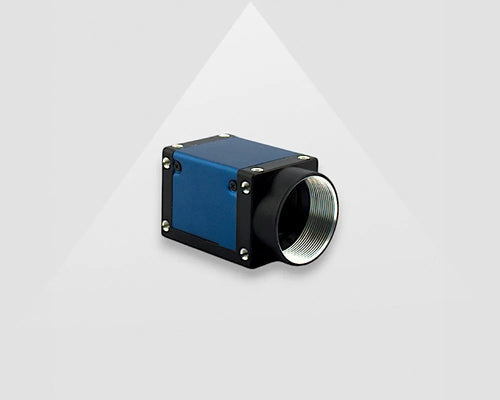
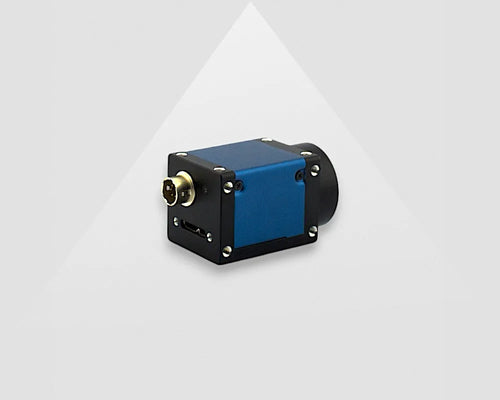
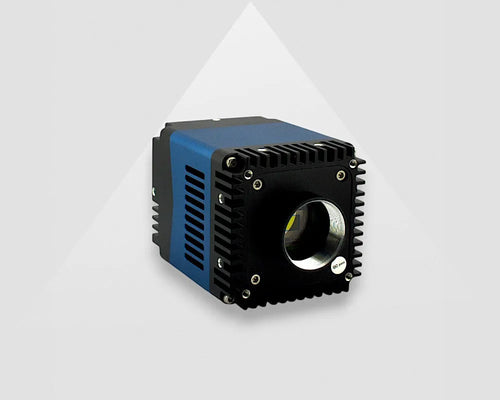
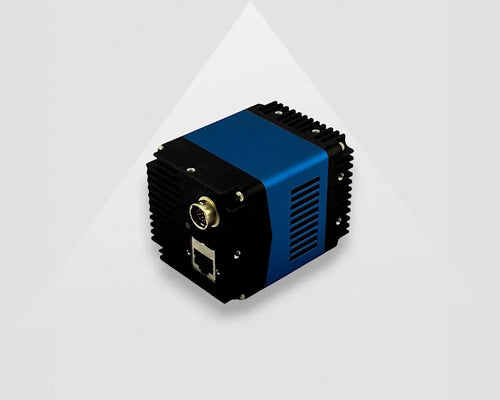




SWIR imaging is useful because materials can absorb, reflect or
transmit short-wave infrared light differently from visible light. This
can reveal information that a colour or monochrome camera may miss.
Common
SWIR camera applications include moisture detection, silicon
inspection, material sorting, packaging inspection, photovoltaic
inspection and research imaging.
The right SWIR system therefore starts with the material property that needs to be revealed, rather than simply choosing the camera with the highest resolution.
Explore additional machine vision applications and solutions for related industrial use cases.
A SWIR camera is not the same as a conventional thermal camera. In many machine vision applications, SWIR imaging uses reflected or transmitted short-wave infrared light, while thermal imaging generally detects infrared radiation emitted by an object because of its temperature.
This makes SWIR particularly useful for material contrast. It can reveal moisture, distinguish materials or provide visibility through silicon at suitable wavelengths without relying on temperature differences.
SWIR generally refers to wavelengths of approximately 900 to 2500 nm. Many industrial InGaAs SWIR cameras operate across a narrower range, commonly extending to around 1700 nm.
A camera described as SWIR therefore does not automatically detect the entire SWIR spectrum. The useful wavelength should be matched to the material or feature being inspected.
Visible-SWIR cameras extend sensitivity towards visible wavelengths as well as into SWIR, allowing one camera to capture information from both spectral regions.
Extended SWIR, or eSWIR, reaches beyond the wavelength range normally covered by standard InGaAs cameras. A wider spectral range is only useful when the application actually requires information at those wavelengths.
Learn more about technologies used in industrial cameras in our camera image sensor Knowledge Center.
SWIR imaging can make differences in moisture easier to detect because water absorbs selected short-wave infrared wavelengths.
When the illumination wavelength coincides with useful water absorption, areas containing different amounts of moisture can produce different image intensities.
This can support applications involving food products, agricultural materials, moisture analysis and automated sorting where visible appearance alone does not provide reliable contrast.
For Canadian machine vision projects involving product quality or material inspection, the useful wavelength should be evaluated against the actual product rather than assumed from its visible colour.
SWIR imaging can provide information through silicon at suitable wavelengths.
This makes the technology useful when structures, alignment features or defects cannot be inspected adequately from a conventional visible image.
Potential applications include semiconductor inspection, wafer-related imaging, alignment and other quality-control processes involving silicon.
The required camera should be combined with suitable SWIR camera lenses and illumination selected for the wavelength, field of view and smallest feature that needs to be resolved.
SWIR imaging can help distinguish materials that appear nearly identical under visible illumination.
Different plastics, coatings and other materials can absorb and reflect short-wave infrared wavelengths differently. A machine vision system can use the resulting contrast for identification, sorting or contamination detection.
This makes SWIR relevant to applications such as plastics sorting, recycling and automated material classification.
See how cameras and other imaging components can be applied to machine vision waste sorting and recycling.
For continuous processes, the combination of material-specific illumination and a SWIR line scan camera can provide an effective approach to high-throughput inspection.
Selected plastics, resins and packaging materials can transmit SWIR wavelengths even when they appear opaque under visible illumination.
Where the material permits sufficient transmission, a SWIR system may be able to inspect product contents, fill level or features hidden behind the external package.
SWIR is not a universal see-through technology. Results depend on material composition, thickness, wavelength, illumination, sensor response and optics.
Testing the actual packaging material is therefore an important part of system development.
SWIR imaging can support selected inspection tasks involving silicon-based photovoltaic materials.
Features or defects that produce limited visible-light contrast may become more distinguishable when the imaging system operates at a suitable infrared wavelength.
As with semiconductor inspection, camera resolution alone does not determine performance. Spectral response, illumination and optics must also match the feature being inspected.
Short-wave infrared wavelengths can provide improved visibility compared with visible light through certain forms of haze, smoke or atmospheric obscuration.
The improvement is not universal and depends on particle size, wavelength, environmental conditions and the complete optical setup.
For outdoor, research or specialised monitoring applications in Canada, the expected environment should therefore be evaluated together with the camera's spectral range.
SWIR image quality depends on the complete imaging system, not only on megapixel count.
Important factors include:
These factors should be evaluated together when comparing SWIR camera models.
Area-scan SWIR cameras capture complete two-dimensional frames and suit individual objects, samples and many laboratory applications.
SWIR line scan cameras build an image one line at a time. They are often better suited to continuously moving materials, conveyors, webs and high-throughput sorting.
Explore area-scan cameras or the wider line-scan camera range depending on the motion and acquisition requirements.
A complete SWIR imaging system should be designed around the wavelength required by the application.
A standard visible-light lens may not provide sufficient transmission or focus performance in the SWIR range. VA Imaging offers dedicated SWIR and Visible-SWIR lenses. Once sensor size, field of view and working distance are known, the lens calculator can help determine the required focal length.
Illumination is equally important. Broadband illumination covers several wavelengths, while narrowband lighting can target a specific material response. Explore machine vision lighting for compatible options.
Where wavelength isolation is required, bandpass, longpass and shortpass filters can control which wavelengths reach the sensor.
A cooled SWIR camera can be useful when longer exposure times, weak optical signals or stable sensor temperature are important.
TEC cooling can help control temperature-dependent sensor behaviour and may be valuable for low-noise measurement and research applications.
For high-speed industrial inspection with strong illumination and short exposure times, active cooling may be less important. Cooling should therefore be selected according to the imaging requirement rather than treated as automatically better.
SWIR camera prices in Canada depend on sensor technology, resolution, acquisition speed, interface and cooling.
SWIR cameras generally cost more than conventional visible-light machine vision cameras because they use specialised detector technology. SWIR-compatible lenses, illumination, optical filters and interface hardware can also contribute to the total system cost.
Current Canadian-store pricing is displayed on each VA Imaging SWIR camera product. Compare cost only after defining the required wavelength and imaging performance.


When buying a SWIR camera in Canada, start with the material or feature that needs to be detected.
VA Imaging supplies cameras, optics, lighting and related machine vision components for industrial and research projects across Canada.
If you need help specifying the system, contact VA Imaging for your Canadian imaging project.
I am absolutely thrilled with the MER2-160-227U3M camera I purchased from VA-Imaging. The camera exceeds my expectations in every way. The image quality is sharp and clear, even with fast movements. Installation was straightforward. VA-Imaging's customer service was also outstanding. They were very helpful in answering my questions and delivered the camera quickly and securely.
The cameras are a great value for money and the lenses also. The software is outdated and needs refreshing. It took me considerable amount of time to discover how to access the camera features.
Its a pleasure to contact with the sales department. They are very polite and always ready to help. Our orders are always delivered on time and the communication is easy and simple. High quality products.
We initially explored several embedded vision camera and USB3 camera options for our application. Our main priorities were compact dimensions and keeping the required software development to a minimum. We selected a VEN-161 boardlevel camera. It was easy to integrate and USB3 Vision interface allowed our software team to get started quickly. The sales guy was very helpful with selecting the hardware for us. We are happy that we selected the USB3 board-level camera instead of a Mipi embedded vision camera as we didn't require now the additional driver development.
It was easy and quick process from ordering to receiving. One personal message from the team is making it even better. Thanks
In the commercial phase we had maximum support and delivery times were respected. The material is quite good with low and competitive costs.
Most common questions are already answered on our FAQ page. Questions about delivery times, warranty, loan, returns, longevity, manuals etc.
Image processing software captures the images from an industrial camera and performs complex image processing tasks like segmentation, detection, code and text reading.
We share our machine vision knowledge in our knowledge center. Find tutorials how to connect cameras, install software & program I/O.
Check how our customers use our industrial cameras, lenses and lighting in their application
Ask our machine vision experts! We answer rapidly and think along with your imaging project.
The download page provides access to product documentation, software, drivers, manuals and technical resources for industrial cameras and machine vision components.