
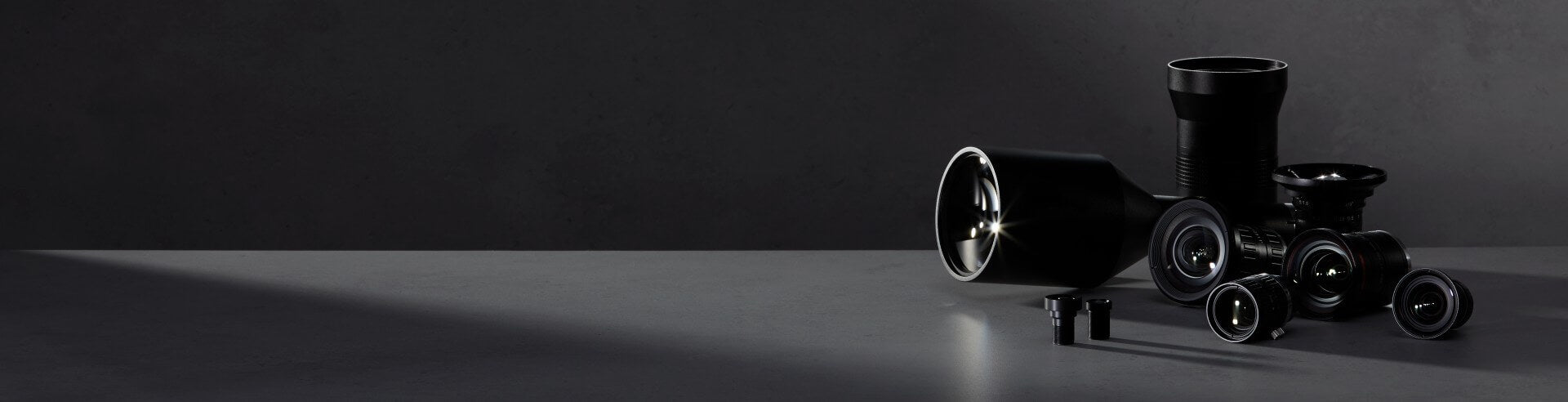
A telecentric lens gives machine vision systems more consistent image geometry when small changes in object position could influence dimensional measurements.
Unlike a standard lens, a telecentric lens reduces perspective error and keeps magnification more consistent within its supported range. This helps the camera produce a controlled image for dimensional inspection, automated gauging and quality control.
VA Imaging offers more than 100 telecentric lens options with different magnifications, working distances, sensor formats, lens mounts and coaxial lighting options. Canadian customers can compare the available models online and receive support with selecting a complete lens, camera and lighting configuration.
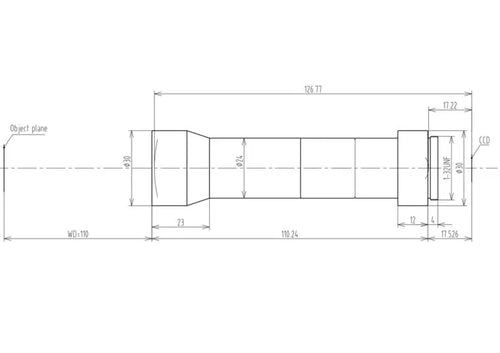
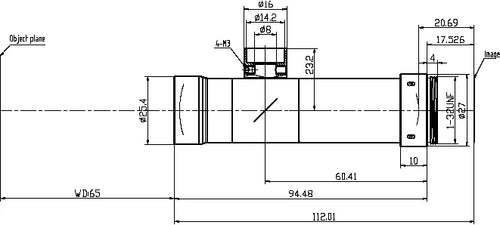
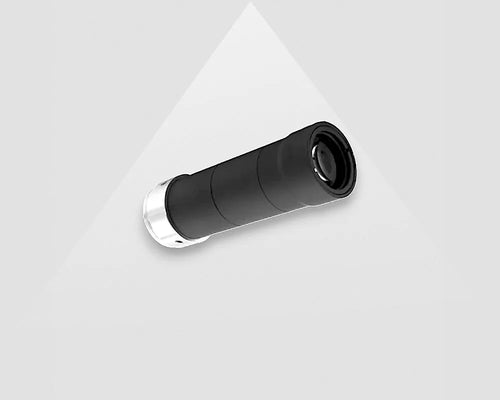
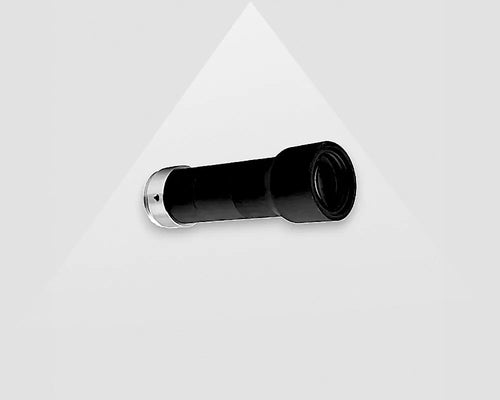
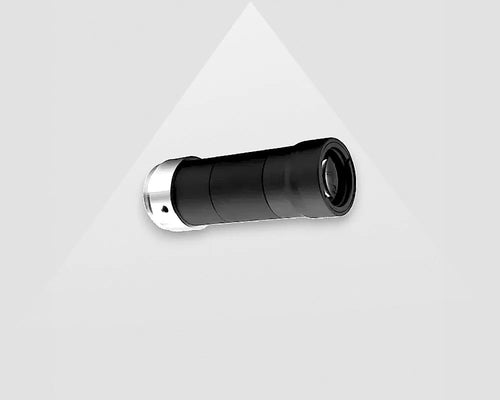
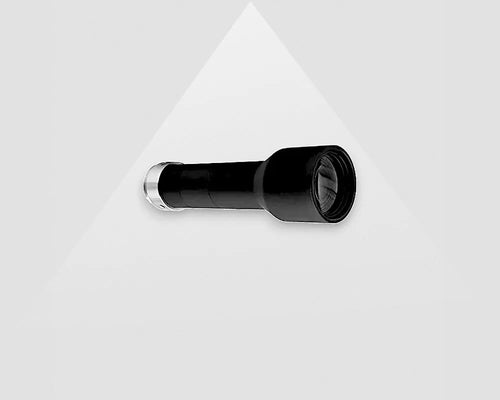
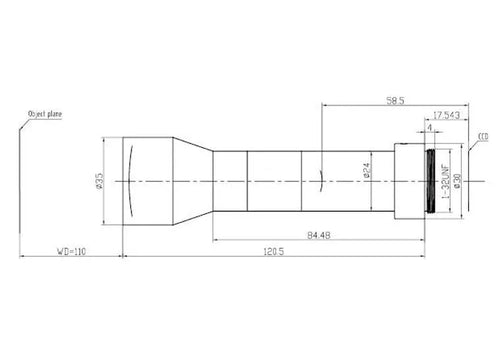
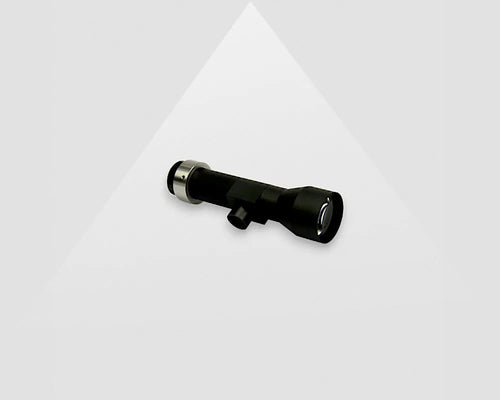
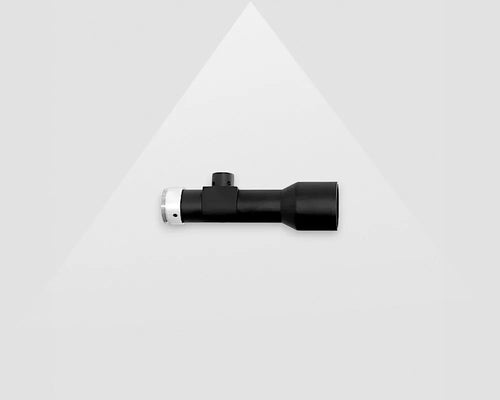
A telecentric lens improves measurement accuracy by reducing changes in apparent object size caused by differences in object distance.
With a standard machine vision lens, an object appears larger as it moves closer to the camera and smaller as it moves further away. Measurement software can interpret this perspective change as a dimensional difference, even when the actual component has not changed.
An object-space telecentric lens accepts chief rays that are nearly parallel to the optical axis. This keeps the object scale more consistent when its position changes within the supported range.
This is useful when:
A telecentric lens does not perform the measurement itself. It provides controlled image geometry so the camera and software can calculate dimensions more reliably.
| Application situation | Possible imaging problem | What to check |
|---|---|---|
| Component height varies | Apparent dimensions change | Telecentric range and depth of field |
| A large object must fit in the image | Field of view is too small | Sensor size and magnification |
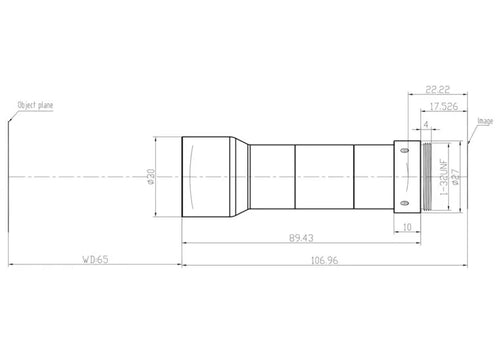
| Installation space is limited | Lens does not fit the machine | Working distance and lens dimensions |
| Very small details must be measured | Image contains insufficient detail | Lens and camera resolution |
| A large camera sensor is used | Corners become dark or unusable | Maximum supported sensor size |
| Reflective surfaces are inspected | Edges or markings are difficult to see | Coaxial illumination |
| A heavy lens is mounted horizontally | Camera mount is placed under stress | Dedicated lens support |
A standard C-mount lens may still be sufficient for barcode reading, object recognition, positioning and presence detection. A telecentric lens becomes important when small perspective variations can change the calculated dimensions.
Select a telecentric lens by matching the field of view, camera sensor, working distance, resolution and mechanical installation.
The field of view must include the complete inspection area and allow for normal positioning variation.
Magnification determines how large the object is projected onto the camera sensor. The VA Imaging collection includes options ranging from below 0.1x to above 6x.
Lower magnification generally captures a larger area, while higher magnification shows a smaller area in more detail. Use the VA Imaging lens calculator to create an initial selection.
The lens must support the complete sensor format of the selected camera. A lens designed for a smaller sensor may cause dark corners or an unusable image area.
Available options include support for 2/3-inch, 1-inch, 1.1-inch, 4/3-inch and 39 mm sensor formats. Always confirm the maximum supported sensor size on the product page.
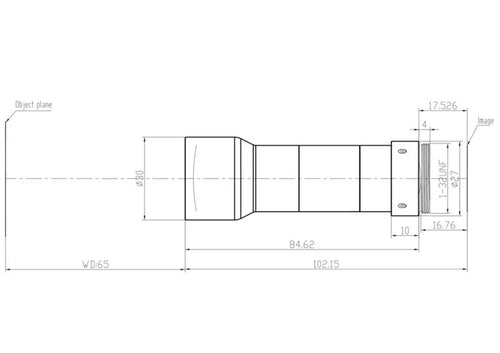
Working distance is the specified distance between the lens and the inspected object.
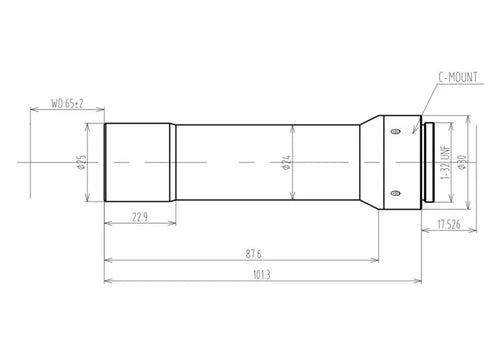
VA Imaging offers working-distance options from 65 mm to 465 mm. Check the available space inside the machine and confirm the exact distance in the product specifications and mechanical drawing.
The lens must reproduce the smallest feature the camera needs to detect. A high-resolution camera provides limited benefit when the lens cannot resolve the same level of detail.
The telecentric lens and industrial camera should therefore be selected together.
The collection includes C-mount and M58 telecentric lenses. Many models connect directly to standard C-mount cameras, while larger lenses or sensors may require an M58 connection or adapter.
The physical dimensions and weight of the lens should also be checked before final selection.
Telecentric lenses are often larger and heavier than standard machine vision lenses.
A large lens installed horizontally should have a separate support bracket. This prevents the lens weight from placing unnecessary stress on the camera mount and improves stability in systems affected by vibration.
VA Imaging can supply support brackets for telecentric lenses, although these are not currently shown online.
Depth of field and telecentric range should also be checked separately. An object can appear focused while its position still affects measurement performance.
Lighting must make the measured edges or surface features clearly visible.
Telecentric lighting produces parallel illumination and creates a controlled silhouette. It is suitable for measuring outer dimensions, diameters, gaps, holes and profiles.
Some telecentric lenses also include a coaxial light input. A semi-transparent mirror directs the light through the lens and onto the object. This can help when inspecting flat surfaces, reflective materials or printed details.
The lighting should be tested with the actual component whenever possible.
A complete measurement system combines the telecentric lens with a compatible camera, lighting, stable mounting and image-processing software.
USB3 cameras can be suitable for compact systems requiring high data-transfer speeds. GigE cameras may be more suitable when longer cable distances are required.
VA Imaging supports engineers, OEMs, machine builders and system integrators across Canada. For a focused recommendation, provide:
I am absolutely thrilled with the MER2-160-227U3M camera I purchased from VA-Imaging. The camera exceeds my expectations in every way. The image quality is sharp and clear, even with fast movements. Installation was straightforward. VA-Imaging's customer service was also outstanding. They were very helpful in answering my questions and delivered the camera quickly and securely.
The cameras are a great value for money and the lenses also. The software is outdated and needs refreshing. It took me considerable amount of time to discover how to access the camera features.
Its a pleasure to contact with the sales department. They are very polite and always ready to help. Our orders are always delivered on time and the communication is easy and simple. High quality products.
We initially explored several embedded vision camera and USB3 camera options for our application. Our main priorities were compact dimensions and keeping the required software development to a minimum. We selected a VEN-161 boardlevel camera. It was easy to integrate and USB3 Vision interface allowed our software team to get started quickly. The sales guy was very helpful with selecting the hardware for us. We are happy that we selected the USB3 board-level camera instead of a Mipi embedded vision camera as we didn't require now the additional driver development.
It was easy and quick process from ordering to receiving. One personal message from the team is making it even better. Thanks
In the commercial phase we had maximum support and delivery times were respected. The material is quite good with low and competitive costs.
Most common questions are already answered on our FAQ page. Questions about delivery times, warranty, loan, returns, longevity, manuals etc.
Image processing software captures the images from an industrial camera and performs complex image processing tasks like segmentation, detection, code and text reading.
We share our machine vision knowledge in our knowledge center. Find tutorials how to connect cameras, install software & program I/O.
Check how our customers use our industrial cameras, lenses and lighting in their application
Ask our machine vision experts! We answer rapidly and think along with your imaging project.
The download page provides access to product documentation, software, drivers, manuals and technical resources for industrial cameras and machine vision components.