
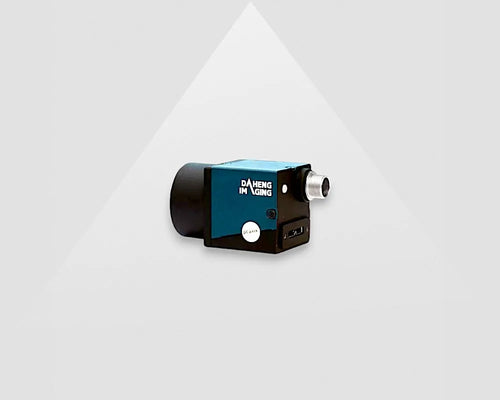

Industrial NIR cameras capture near-infrared light beyond the visible spectrum and create monochrome images for machine vision, research and low-light applications. VA Imaging offers NIR cameras for Canadian projects that require controlled illumination, stable contrast and reliable integration with industrial imaging systems.
The Canadian collection includes USB3 Vision, GigE Vision and 10GigE Vision cameras with different resolutions, sensor formats, frame rates and shutter types. Rather than selecting a camera by megapixels alone, start with the material, wavelength, movement and installation conditions, then match the camera with suitable optics, lighting, filters and software.
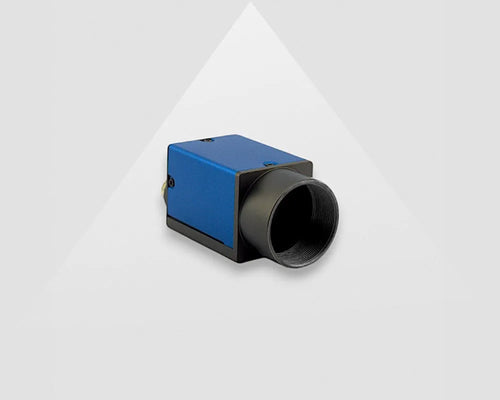
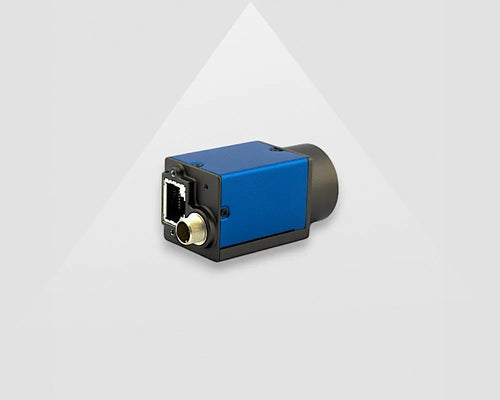
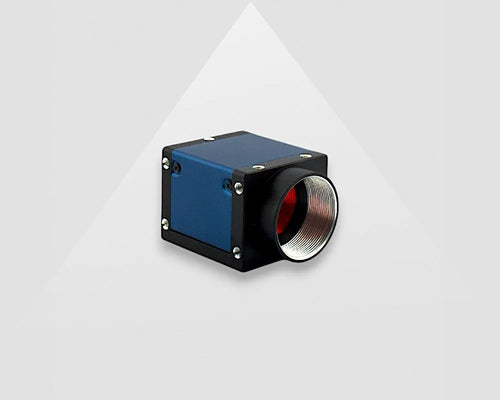
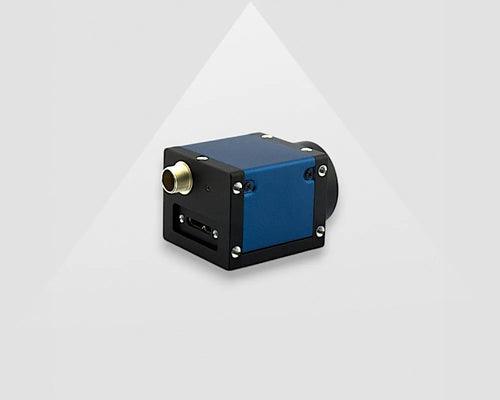
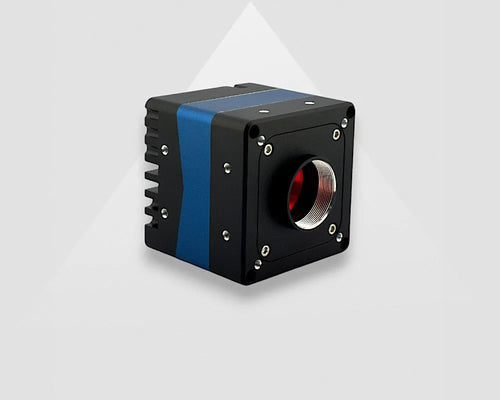
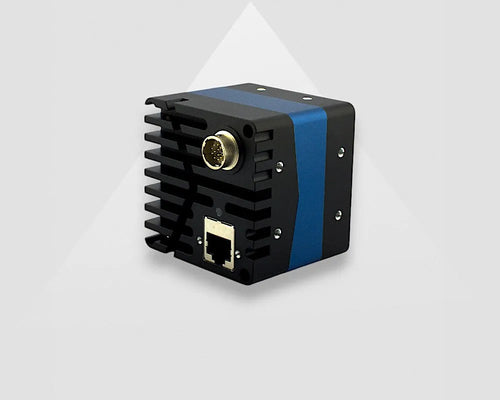


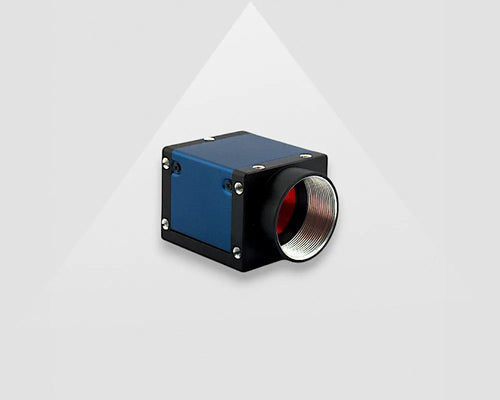
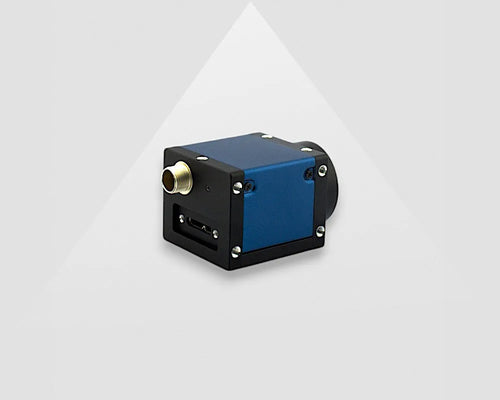
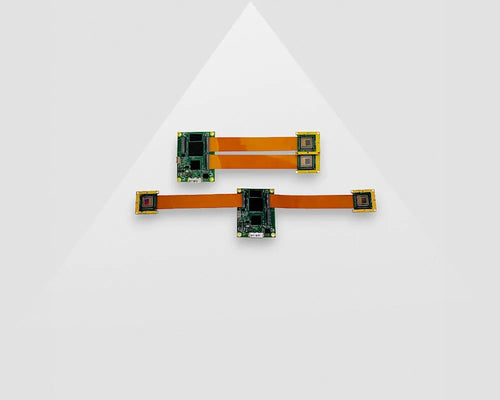
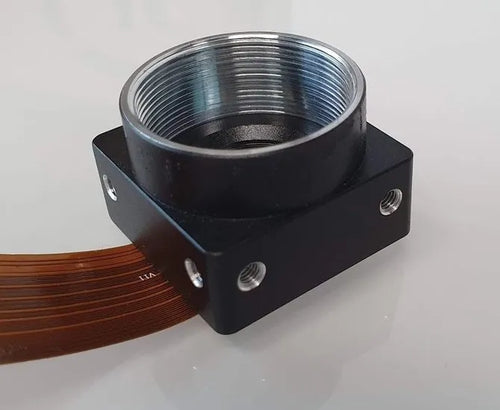
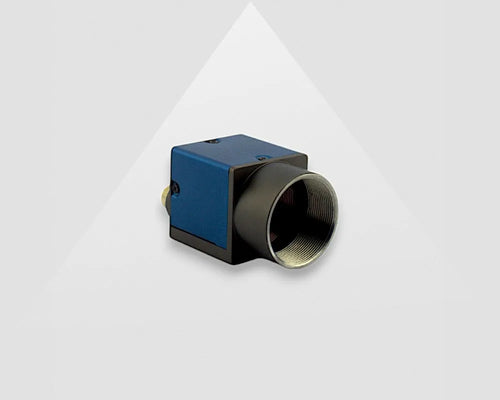
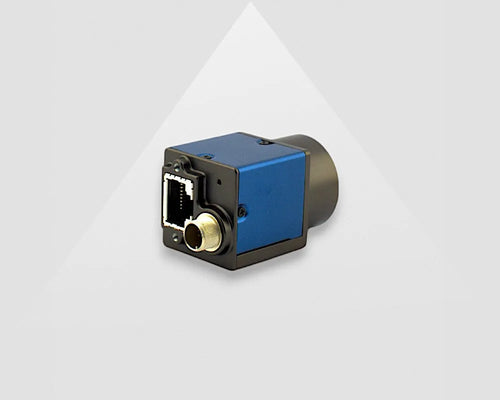
NIR cameras create useful contrast when the target and its surroundings reflect near-infrared light differently. The first step is therefore to define the material, feature size, field of view, working distance and expected movement.
If the target and background respond similarly at one wavelength, increasing resolution may not solve the inspection problem. Testing the target under the intended NIR illumination can reveal whether enough contrast exists before the camera specification is finalised.
For industrial systems, repeatability is especially important. Changes in ambient light, illumination angle or target position can affect image contrast even when the camera settings stay the same.
NIR cameras should be compared at the wavelength actually used in the application. The cameras in this collection are intended for imaging commonly performed around 800 nm to 1000 nm, although exact sensitivity varies by sensor.
Definitions of the wider near-infrared range can differ between technologies and manufacturers. For machine vision selection, the individual sensor-response curve is more useful than the NIR label alone.
Common illumination wavelengths include approximately 850 nm and 940 nm. A sensor may respond more strongly at one wavelength, while the target material itself may also produce different contrast.
NIR camera sensitivity changes with wavelength, so spectral response should be considered alongside resolution and frame rate. Quantum efficiency, often shortened to QE, indicates how effectively incoming photons are converted into a measurable electrical signal.
Check the manufacturer’s spectral-response or QE curve at the intended wavelength rather than comparing only peak sensitivity.
A standard monochrome camera may detect some near-infrared light, particularly when an IR-cut filter is not present. However, this does not guarantee the same performance as an NIR-optimised sensor.
Exposure time, lens aperture, illumination power, working distance and filter transmission also influence the final result. High resolution alone does not indicate strong NIR performance.
NIR cameras perform more consistently when unwanted ambient light is controlled. Daylight, factory lighting and reflections may alter brightness and contrast even when the camera exposure remains unchanged.
A bandpass filter can isolate a selected wavelength range, while a longpass filter can block shorter visible wavelengths. Matching the filter to the NIR illuminator can make the imaging system less sensitive to surrounding light.
Before increasing exposure or gain, check the illumination angle, distance and uniformity. Longer exposure can introduce motion blur, while excessive gain can make image noise more visible.
NIR cameras used on moving targets require the shutter, exposure time and frame rate to be matched to the application. A global shutter captures the complete frame at one moment and is generally preferred for conveyors, moving components and transport imaging.
A rolling shutter may be suitable for stationary subjects or slower processes where motion distortion is not a concern.
Resolution should be based on the smallest feature that must be detected across the required field of view. More pixels can provide additional detail, but they also increase demands on the lens, interface, computer and storage system.
For example, higher-speed global-shutter models can be useful when motion is important, while higher-resolution cameras may be preferred when fine detail must be captured across a larger image area. Final selection should still be based on the complete camera and optical requirements.
NIR cameras are available with different industrial interfaces depending on bandwidth, cable distance and system layout.
USB3 Vision is practical for high data rates over shorter direct camera-to-computer connections. GigE Vision supports network-based integration and longer cable runs. 10GigE Vision provides additional bandwidth for demanding high-resolution or higher-throughput systems.
For distributed Canadian installations, also consider power delivery, triggering, network capacity, cable routing and maintenance access. The complete data path must support the required resolution and frame rate reliably.
NIR cameras should be selected together with the lens, illumination and optical filter rather than as an isolated component.
The lens must cover the sensor format, resolve the required image detail and transmit the selected wavelength. An IR-corrected lens can help reduce focus shift when a system operates under both visible and near-infrared illumination.
NIR lighting should provide sufficient intensity and coverage at the working distance. The lighting angle can also affect whether a material or surface feature becomes visible.
Bandpass and longpass filters can reduce unwanted wavelengths and improve consistency under changing ambient conditions. Sensor size, lens mount, aperture, wavelength transmission and filter mounting should therefore be confirmed before the system is finalised.
NIR cameras can support comparative material analysis when different materials, coatings or surface conditions reflect the selected wavelength differently.
This contrast can support sorting, presence detection, surface inspection or process monitoring where visible-light imaging does not separate the features sufficiently.
NIR imaging should not automatically be treated as spectroscopy. The result depends on the material, illumination wavelength, sensor response and image-processing method, so practical testing remains important before selecting the production system.
Industrial NIR cameras can support manufacturing, transport, agricultural, laboratory and low-light imaging when near-infrared illumination provides useful contrast.
In manufacturing, NIR imaging may help distinguish materials, coatings or surface conditions that appear similar under visible illumination. Production systems must also account for line speed, triggering and stable lighting.
For vehicle and transport imaging, controlled NIR illumination can support licence-plate or vehicle capture when visible-light conditions vary. Short exposure times and synchronised lighting can be important for moving targets.
Food and agricultural applications may use differences in NIR reflectivity when inspecting crops, fruit, vegetables or plant material. The useful wavelength depends on the product and the inspection objective.
NIR cameras can also be integrated into biometric, microscopy, scientific and laboratory systems using controlled infrared illumination. Confirm the required wavelength, image resolution, triggering and software requirements for each application.
NIR cameras installed outdoors or in remote Canadian locations require additional environmental planning. Camera operating limits, enclosure design, moisture, dust, condensation and temperature conditions should all be reviewed before installation.
Changing daylight can compete with the controlled NIR source. Optical filters, shielding and sufficient illumination can help maintain more stable contrast.
For remote installations, also consider network access, power, cable distance and maintenance requirements. Do not assume that the standard camera housing provides the environmental protection required for every Canadian installation.
NIR cameras use near-infrared light reflected by the target and are suitable for active illumination, low-visible-light imaging and reflectivity-based inspection.
SWIR cameras operate at longer wavelengths and can be considered when important material contrast lies beyond the useful response of conventional silicon-based NIR sensors.
Thermal cameras detect infrared energy emitted by an object and are used when temperature or heat distribution is the required information.
The correct technology should therefore be selected according to the physical property that needs to be detected.
A complete NIR camera system combines the sensor, lens, illumination, filter, interface and software around the inspection requirement.
When requesting application guidance, provide the target material, intended wavelength, field of view, working distance, smallest feature, target movement, required frame rate, interface preference, cable distance and environmental conditions.
VA Imaging can help Canadian customers evaluate NIR cameras together with machine vision lenses, lighting, optical filters, cabling and software.
Browse the NIR cameras in this collection or contact VA Imaging for help selecting a compatible imaging setup for your project in Canada.
I am absolutely thrilled with the MER2-160-227U3M camera I purchased from VA-Imaging. The camera exceeds my expectations in every way. The image quality is sharp and clear, even with fast movements. Installation was straightforward. VA-Imaging's customer service was also outstanding. They were very helpful in answering my questions and delivered the camera quickly and securely.
The cameras are a great value for money and the lenses also. The software is outdated and needs refreshing. It took me considerable amount of time to discover how to access the camera features.
Its a pleasure to contact with the sales department. They are very polite and always ready to help. Our orders are always delivered on time and the communication is easy and simple. High quality products.
We initially explored several embedded vision camera and USB3 camera options for our application. Our main priorities were compact dimensions and keeping the required software development to a minimum. We selected a VEN-161 boardlevel camera. It was easy to integrate and USB3 Vision interface allowed our software team to get started quickly. The sales guy was very helpful with selecting the hardware for us. We are happy that we selected the USB3 board-level camera instead of a Mipi embedded vision camera as we didn't require now the additional driver development.
It was easy and quick process from ordering to receiving. One personal message from the team is making it even better. Thanks
In the commercial phase we had maximum support and delivery times were respected. The material is quite good with low and competitive costs.
Most common questions are already answered on our FAQ page. Questions about delivery times, warranty, loan, returns, longevity, manuals etc.
Image processing software captures the images from an industrial camera and performs complex image processing tasks like segmentation, detection, code and text reading.
We share our machine vision knowledge in our knowledge center. Find tutorials how to connect cameras, install software & program I/O.
Check how our customers use our industrial cameras, lenses and lighting in their application
Ask our machine vision experts! We answer rapidly and think along with your imaging project.
The download page provides access to product documentation, software, drivers, manuals and technical resources for industrial cameras and machine vision components.