Ultimate Guide to Smart Vision Lights for Machine Vision Applications
Smart vision lights are advanced LED illumination systems designed to optimize the performance of machine vision applications. In industrial autom...
Our Knowledge Center serves as a valuable resource for engineers and developers working with machine vision and computer vision technologies. We offer informative and technical articles to assist with your project. You can easily locate relevant content by exploring our four categories or searching specific terms in the search bar.
Smart vision lights are advanced LED illumination systems designed to optimize the performance of machine vision applications. In industrial autom...
In the world of 3D scanning, capturing precise information about the shape and geometry of objects is critical. From manufacturing and quality ins...
The physical world is inherently three-dimensional. Traditional cameras, however, capture only two dimensions: height and width, leaving out the cr...
The Modulation Transfer Function (MTF) is a fundamental metric used to assess the imaging performance of vision systems such as lenses, industrial ...
Light sensitivity is a critical parameter in selecting industrial cameras for low-light imaging applications. This article presents a comparative e...
Image sensors are essential components in digital cameras and imaging devices. They convert light into electronic signals, enabling the creation of...
This section provides detailed instructions from basic camera installation to compiling programming examples, ensuring optimal image acquisition for you machine vision system.
You will find detailed articles on installing and setting up various industrial cameras, including USB3 cameras and GigE cameras. It covers the use of third-party software like MicroManager, 2nd Look, and Kinovea, as well as how to install Aravis on Linux and provide sample code in Python and C# for Visual Studio.
If you are looking for guides for your machine vision system, the Camera & Vision section offers articles on optimizing camera performance, such as using C-mount lens filters, adjusting parameters like pixel binning/ decimation, exposure time and white balance.
It also addresses the complexities of connecting and synchronising multiple GigE cameras. Learn more about how to use depth of field to your advantage and how to optimize camera parameters for moving object detection.
Seeking for some guidance on machine vision hardware selection? These guides provides a technical roadmap for choosing appropriate machine vision lighting, considering factors like resolution, field of view, spectral sensitivity and lens distortion.
The articles explains the differences between rolling shutter and global shutter and global shutter cameras and provides guidance on selecting the appropriate interfaces and camera specifications for applications like barcode and DMC code reading.
While not as technical, the knowledge center topic "Machine Vision Market Application Analysis" does cover the latest trends and developments in the machine vision market, including information on industry events and exhibitions where cutting-edge applications are showcased.
This knowledge base undergoes regular updates to ensure you have access to the most recent advancements in camera technology, computer vision algorithms, and best practices in machine vision system design and implementation.
With articles written by our vision technical experts, our Knowledge Center provides the right guidance in the process of building your machine vision system.
Do you want to know more about applications and solutions with machine vision? Check out our "Machine Vision Solutions & Applications" page for more information.
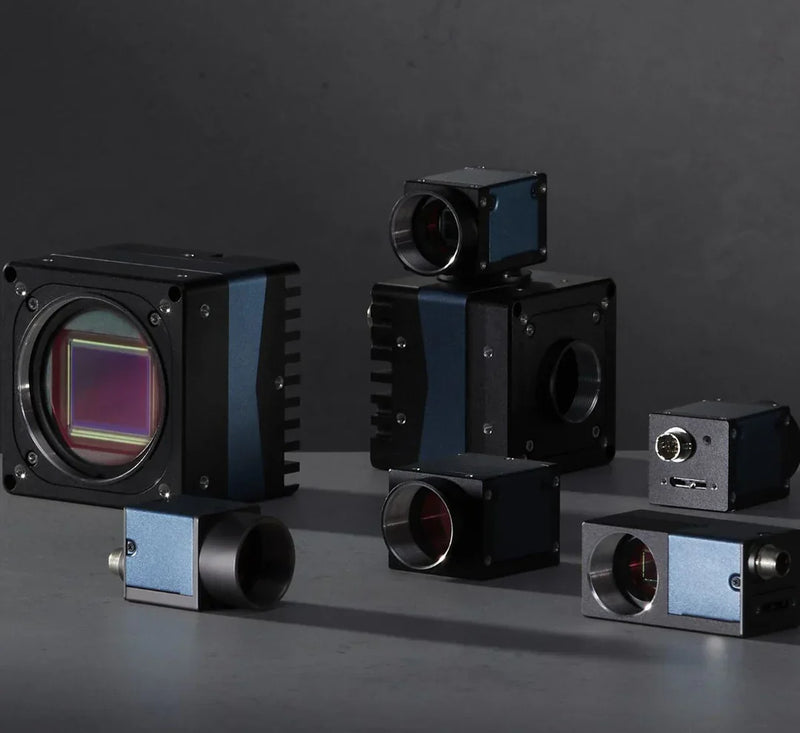
Explore our computer vision camera products for a full overview of our products. We offer a wide range of USB3 vision cameras, GigE cameras, 5GigE & 10GigE cameras, machine vision lenses and accessories for your vision system.