
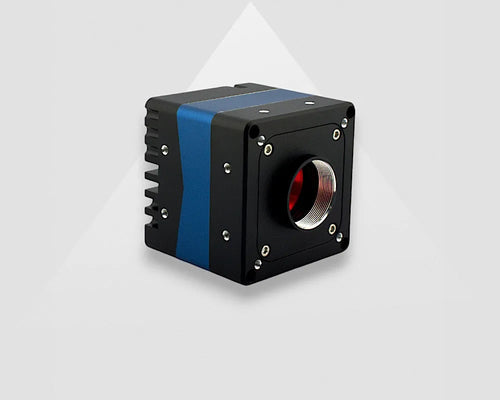
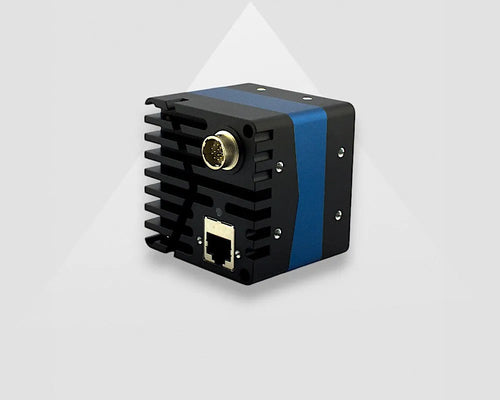

Explore industrial 5GigE and 10GigE cameras for high-resolution and high-speed machine vision. Compared with standard GigE cameras, these high-speed Ethernet interfaces provide more bandwidth for transferring large images, increased frame rates and higher-bit-depth image data.
VA Imaging Inc. supports manufacturers, machine builders, system integrators, researchers and OEM engineering teams throughout the United States from our office in Charlotte, North Carolina.
Use the product filters to compare available camera interfaces, resolutions, frame rates, image sensors, shutter types, sensor sizes and monochrome or color options.
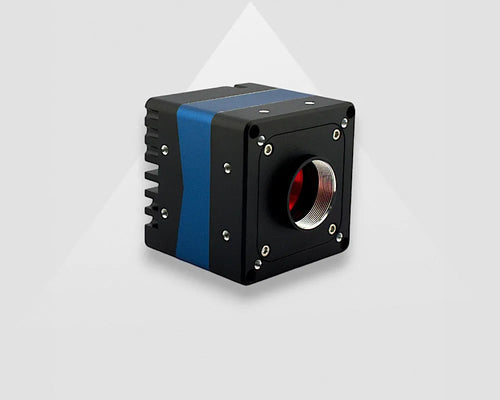
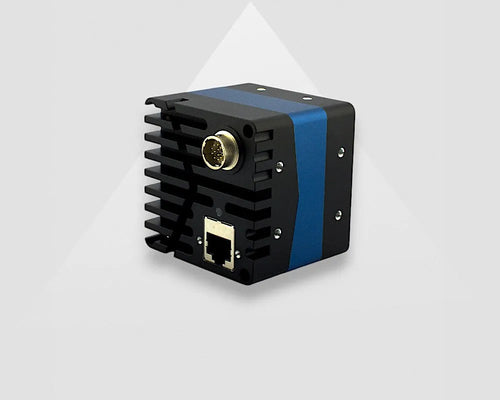


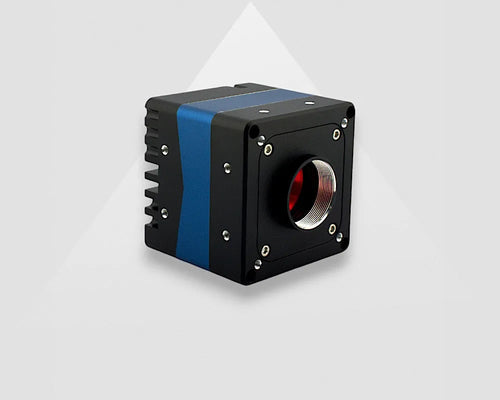
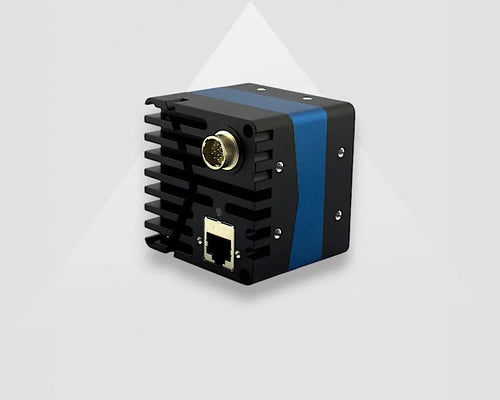
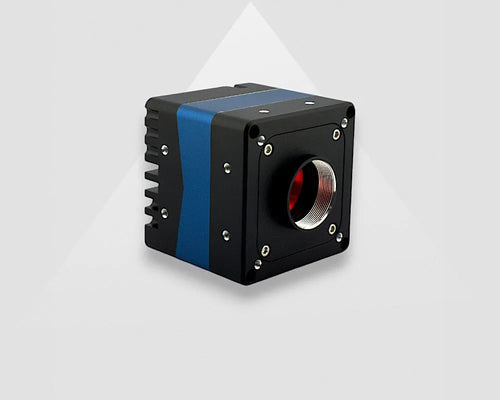
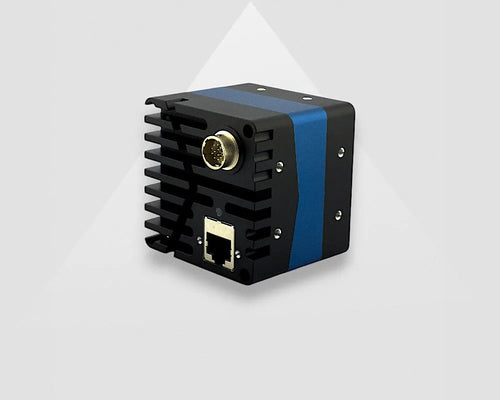


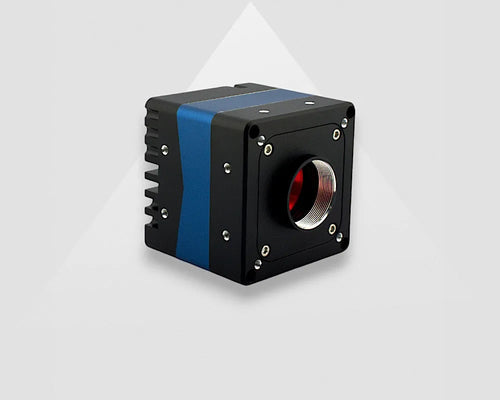
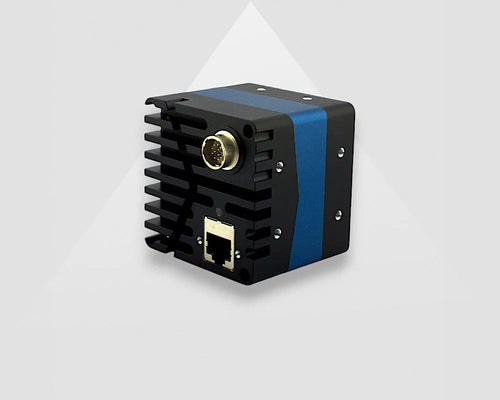
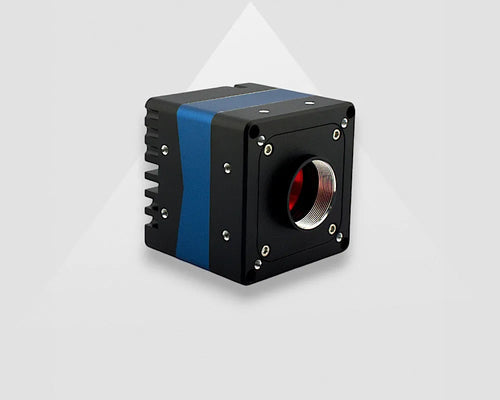
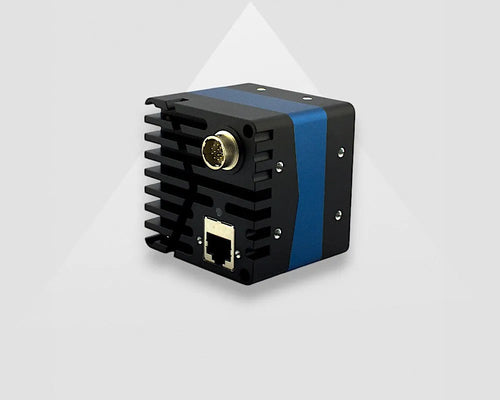


5GigE and 10GigE cameras are industrial cameras that transfer image data over high-speed Ethernet connections.
A 5GigE interface has a nominal network rate of up to 5 gigabits per second, while a 10GigE interface provides up to 10 gigabits per second. The additional bandwidth can support larger images, increased frame rates and higher image bit depths.
The cameras in this collection use GigE Vision and support GenICam-based camera control. GigE Vision standardizes image transfer over Ethernet, while GenICam provides a common method for accessing and controlling camera features.
| Feature | 5GigE cameras | 10GigE cameras |
|---|---|---|
|
Nominal interface rate |
Up to 5 Gbps |
Up to 10 Gbps |
|
Compared with standard GigE |
Up to 5x the interface bandwidth |
Up to 10x the interface bandwidth |
|
Best suited to |
Medium-to-high image-data rates |
Very high image-data rates |
|
Typical requirements |
Higher resolution, increased frame rates or higher bit depth |
Large sensors, high resolution, high frame rates or higher bit depth |
|
Host connection |
Compatible 5GbE or faster interface |
Compatible 10GbE interface |
|
Power and connectors |
Camera-model dependent |
Camera-model dependent |
These figures describe the interface line rate, not the guaranteed frame rate of a camera. Actual performance also depends on the image sensor, resolution, exposure time, pixel format, network hardware and processing computer.
Need help choosing an interface? Ask our US machine vision team.Choose between 5GigE and 10GigE by comparing the amount of image data your application needs to transfer.
Choose a 5GigE camera when standard GigE does not provide enough bandwidth but the application does not need the full capacity of 10GigE.
Common reasons to select 5GigE include:
For applications with lower image-data requirements, compare our standard GigE and 2.5GigE cameras.
Choose a 10GigE camera when the application combines particularly high resolution, high frame rate or higher-bit-depth image output.
Typical requirements include:
The interface alone does not determine the maximum frame rate. Sensor readout speed, exposure time, pixel format and computer performance must also be considered.
For a broader comparison, see our guide to selecting a USB3, GigE, 5GigE or 10GigE camera interface.
A simplified raw image-data estimate can be calculated using:
Number of pixels × frames per second × bits per pixel ÷ 8
For example, an uncompressed 5-megapixel monochrome image stream at 60 frames per second and 8 bits per pixel produces approximately 300 MB of raw image data per second.
An uncompressed 12-megapixel stream using the same frame rate and bit depth produces approximately 720 MB per second.
These are simplified examples, not specifications from individual VA Imaging cameras. Actual bandwidth also depends on exact resolution, pixel format, region of interest, packet configuration and network overhead.
Since 720 MB per second is higher than the theoretical 625 MB per second line rate of 5GigE, the second example would normally require 10GigE or a reduction in frame rate, resolution or image area.
Select a 5GigE or 10GigE machine vision camera by matching its resolution, frame rate, sensor and shutter to the application.
Resolution determines how much detail the camera can capture. A higher resolution also creates larger images and increases the required bandwidth.
Frame rate should be based on the object speed and inspection cycle. Fast-moving objects may require both a high frame rate and a short exposure time.
A global shutter is generally preferred for moving objects because it captures the entire image at one moment. A rolling shutter may be suitable for stationary or slower applications.
Monochrome cameras are commonly used for measurement, inspection and low-light imaging. Color cameras are useful when color information is required for sorting, classification or quality control.
Higher image bit depths, such as 10-bit or 12-bit output, provide more intensity levels than 8-bit imaging. They also increase the amount of image data that must be transferred and processed.
The terms 5GigE and 10GigE describe the Ethernet interface speed, not the camera’s image bit depth.
The sensor size, field of view, working distance and required image detail determine which machine vision lens is suitable.
Lighting must provide sufficient brightness and contrast for the required exposure time. High-speed applications may need more powerful lighting because shorter exposure times allow less light to reach the sensor.
The wider range of industrial cameras for machine vision can help you compare other interfaces and camera configurations.
A complete 5GigE or 10GigE camera system requires the camera, Ethernet connection, host interface, power, computer, lens, lighting and software.
A traditional frame grabber is not always required for GigE Vision, but the computer must have a network interface that supports the selected connection speed and expected data volume.
For reliable full-bandwidth operation, a dedicated 5GbE or 10GbE network interface or industrial acquisition card is generally recommended.
The computer must also provide sufficient:
For multi-camera systems, calculate the combined data rate of all connected cameras. VA Imaging offers compatible GigE and 10GigE interface cards and frame grabbers.
Use an Ethernet cable and connector rated for the selected interface speed. Cable category, shielding, connector type and maximum distance depend on the camera model and installation.
For moving machinery, check whether a drag-chain-rated cable is required.
Power requirements also differ between camera series. The current MARS 10GigE product pages specify separate power through an I/O cable rather than Power over Ethernet. Always confirm the power and connector requirements on the individual product page.
Compatible data cables, I/O cables, interface cards and mounting components are available in our industrial camera accessories collection.
The camera and network adapter must be configured correctly before image acquisition begins.
Common steps can include:
5GigE and 10GigE cameras can be controlled through the supported camera SDK or compatible GigE Vision software. Depending on the model, functions may include live acquisition, exposure control, triggering, region of interest, pixel-format selection and digital I/O.
Check the individual product information for supported operating systems and programming options, or explore our computer vision software and camera SDKs.
5GigE and 10GigE cameras are used in US machine vision systems that require more image-data bandwidth than standard GigE can provide.
High-speed production lines may require increased frame rates, high resolution or both.
Typical uses include:
A global shutter and short exposure time may also be required when products move quickly through the inspection area.
5GigE and 10GigE cameras can support robot guidance, automated picking, object positioning and machine tending.
The required interface depends on the image resolution, inspection speed, number of cameras and combined image-data rate.
Several cameras may connect to one computer, provided the network interfaces, PCIe connection and processing system can support the complete data load.
High-speed Ethernet cameras can also be used for:
These applications may require high resolution, increased frame rates or higher-bit-depth image output.
VA Imaging Inc. supports 5GigE and 10GigE camera projects throughout the United States from our Charlotte, North Carolina office.
Our team can help compare cameras based on:
We can also help select the corresponding lens, lighting, Ethernet cable and network-interface hardware for the complete machine vision system. VA Imaging provides nationwide support across the United States from its Charlotte location.
Discuss Your 5GigE or 10GigE Camera ProjectI am absolutely thrilled with the MER2-160-227U3M camera I purchased from VA-Imaging. The camera exceeds my expectations in every way. The image quality is sharp and clear, even with fast movements. Installation was straightforward. VA-Imaging's customer service was also outstanding. They were very helpful in answering my questions and delivered the camera quickly and securely.
The cameras are a great value for money and the lenses also. The software is outdated and needs refreshing. It took me considerable amount of time to discover how to access the camera features.
Its a pleasure to contact with the sales department. They are very polite and always ready to help. Our orders are always delivered on time and the communication is easy and simple. High quality products.
We initially explored several embedded vision camera and USB3 camera options for our application. Our main priorities were compact dimensions and keeping the required software development to a minimum. We selected a VEN-161 boardlevel camera. It was easy to integrate and USB3 Vision interface allowed our software team to get started quickly. The sales guy was very helpful with selecting the hardware for us. We are happy that we selected the USB3 board-level camera instead of a Mipi embedded vision camera as we didn't require now the additional driver development.
It was easy and quick process from ordering to receiving. One personal message from the team is making it even better. Thanks
In the commercial phase we had maximum support and delivery times were respected. The material is quite good with low and competitive costs.
Most common questions are already answered on our FAQ page. Questions about delivery times, warranty, loan, returns, longevity, manuals etc.
Image processing software captures the images from an industrial camera and performs complex image processing tasks like segmentation, detection, code and text reading.
We share our machine vision knowledge in our knowledge center. Find tutorials how to connect cameras, install software & program I/O.
Check how our customers use our industrial cameras, lenses and lighting in their application
Ask our machine vision experts! We answer rapidly and think along with your imaging project.
The download page provides access to product documentation, software, drivers, manuals and technical resources for industrial cameras and machine vision components.