
Choose SWIR lenses for industrial shortwave infrared imaging, inspection, material analysis, and research applications in the United States. VA Imaging Inc. offers fixed focal length C-mount SWIR camera lenses in multiple sensor formats and resolution classes, including dedicated SWIR and Visible+SWIR options.
The correct lens must match the camera’s spectral range, sensor size, resolution, required field of view, and working distance. Use the filters and product specifications below to compare the available models. With our office in Charlotte, North Carolina, VA Imaging Inc. helps the U.S. market select compatible SWIR cameras, lenses, and optical components for machine vision projects.
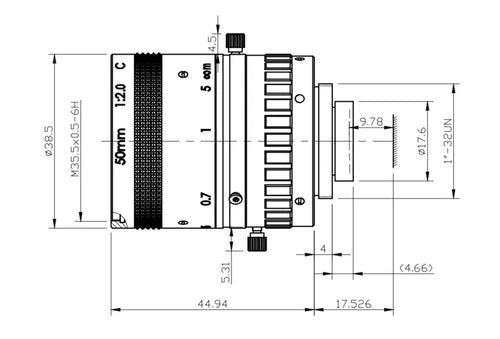
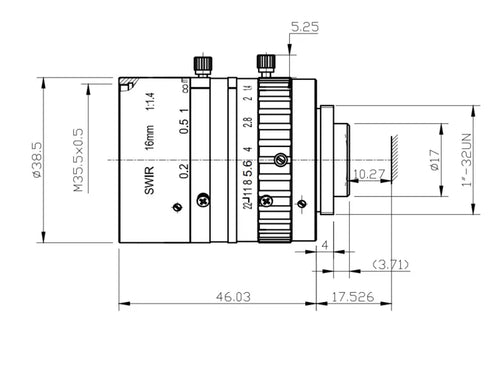
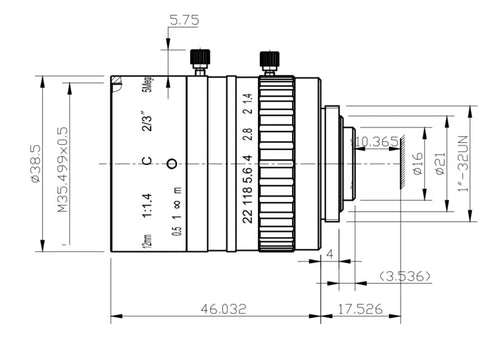
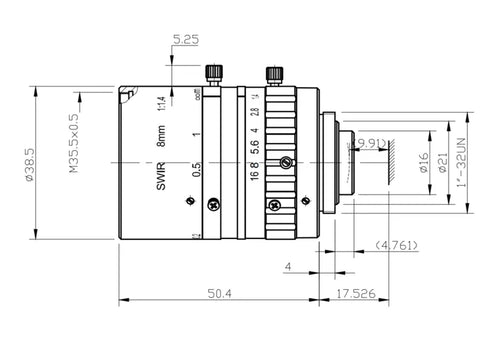
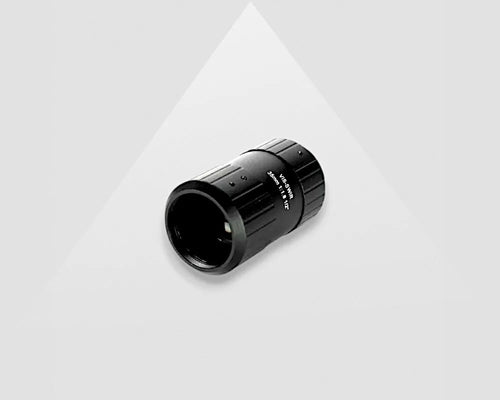
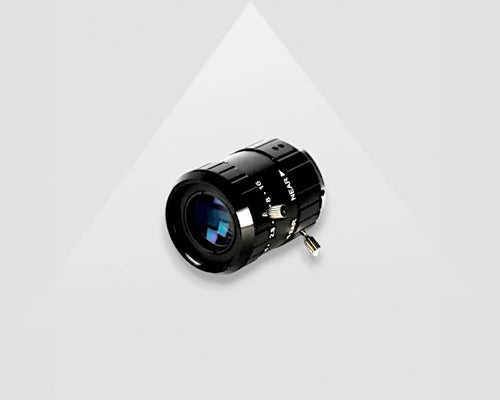
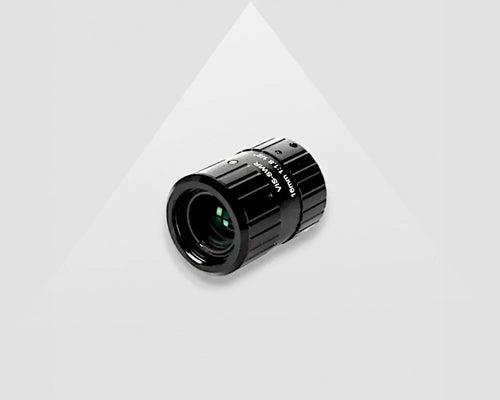
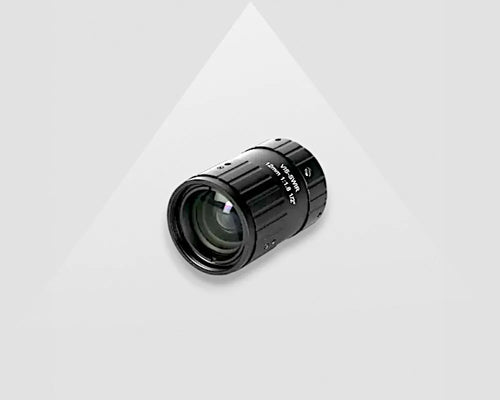
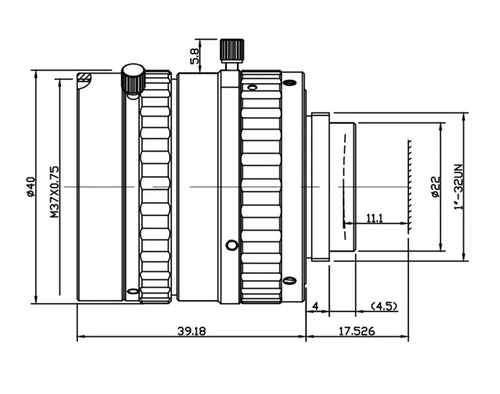
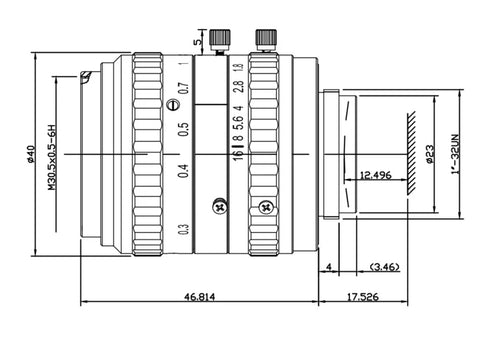
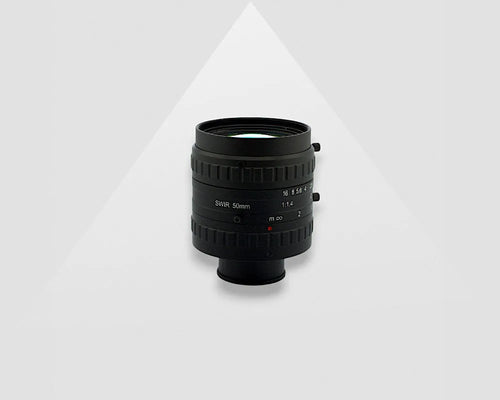
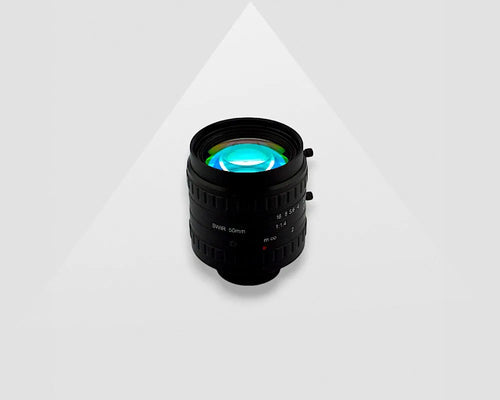
A SWIR lens is an imaging lens designed to transmit and focus shortwave infrared wavelengths onto a compatible camera sensor. In industrial machine vision, many SWIR systems operate around 900–1700 nm, while Visible+SWIR systems can extend from the visible spectrum into the SWIR range.
This spectral capability matters because a conventional visible-light lens may not transmit SWIR wavelengths efficiently or maintain the required focus and resolution outside its intended band. Optical materials, coatings, and mechanical design must therefore be suitable for the wavelengths used by the application.
A SWIR lens does not create material contrast by itself. The complete imaging system—including the object, illumination wavelength, filter, lens, sensor, exposure, and image processing—determines what can be detected.
VA Imaging Inc. offers three fixed focal length C-mount lens series for SWIR machine vision imaging. Use this compatibility chart to narrow the collection by spectral range, sensor format, resolution, pixel size, and focal length.
| VA Imaging Inc. lens series | Spectral range | Maximum sensor format | Resolution class | Recommended camera pixel size | Available focal lengths | Sensor match noted on product pages |
|---|---|---|---|---|---|---|
| 1.3 MP Visible+SWIR | 400–1700 nm | 1/2″ | 1.3 MP | 3.45 µm or larger | 12, 16, 25, and 35 mm | Sony IMX990 and IMX991 |
| 2 MP SWIR | 900–1700 nm | 2/3″ | 2 MP | 3.45 µm or larger | 8, 12, 16, 25, and 50 mm | Sony IMX990 |
| 5 MP SWIR | 900–1700 nm | 1″ | 5 MP | 3.45 µm or larger | 25, 35, and 50 mm | Sony IMX992 and IMX993 |
All models in this cateogry use C-mount. The sensor references above are application-relevant matches stated on the individual product pages. They are not a substitute for checking the exact camera model, active sensor area, cover glass, and spectral response.
Pixel size matters because the lens must reproduce sufficient contrast at the sensor’s spatial sampling rate. A smaller pixel pitch does not automatically improve system detail if the lens, focus, motion, illumination, or signal-to-noise ratio becomes the limiting factor. Compare the lens’s MTF or resolving-power data at the required wavelength and field position rather than selecting only by megapixel count.
SWIR camera lenses support applications in which shortwave infrared provides more useful contrast than visible light. The result depends on the spectral behavior of the material, so representative samples should be tested at the intended wavelength.
Common applications include:
For a complete optical setup, pair the selected lens with a compatible industrial SWIR camera and illumination that provides sufficient output at the target wavelength.
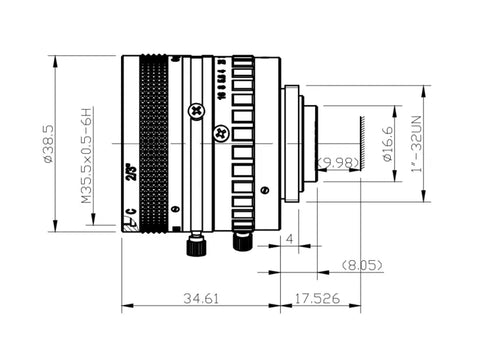
Use the product specifications and supporting optical data to validate a SWIR lens before integration. VA Imaging Inc. provides a technical download request page for resources such as lens manuals, MTF charts, and 3D STEP files.
Contact VA Imaging Inc. if a required curve or file is not shown on a product page.
A SWIR imaging system performs best when the lens, camera, lighting, and optional filters are selected as one optical chain. A component can be individually suitable yet still limit the system when its wavelength range, sensor coverage, geometry, or power does not match the other parts.
Before selecting a lens, define:
Browse machine vision lighting for U.S. applications when planning the illumination geometry. If spectral isolation is required, compare bandpass and longpass lens filters, then verify the filter’s transmission range and thread size against the selected lens. Visible or standard near-infrared lighting is not interchangeable with every SWIR application.
VA Imaging Inc. supports U.S. engineers, machine builders, system integrators, OEMs, researchers, and technical buyers with SWIR lens selection. With our office in Charlotte, North Carolina, VA Imaging Inc. helps the U.S. market compare focal length, sensor coverage, spectral range, resolution, aperture, working distance, camera compatibility, and illumination requirements.
To receive a more useful recommendation, provide the camera model or sensor dimensions, required field of view, working distance, smallest feature, target material, and intended illumination wavelength. Application images or representative samples can also help determine which variables need to be tested.
I am absolutely thrilled with the MER2-160-227U3M camera I purchased from VA-Imaging. The camera exceeds my expectations in every way. The image quality is sharp and clear, even with fast movements. Installation was straightforward. VA-Imaging's customer service was also outstanding. They were very helpful in answering my questions and delivered the camera quickly and securely.
The cameras are a great value for money and the lenses also. The software is outdated and needs refreshing. It took me considerable amount of time to discover how to access the camera features.
Its a pleasure to contact with the sales department. They are very polite and always ready to help. Our orders are always delivered on time and the communication is easy and simple. High quality products.
We initially explored several embedded vision camera and USB3 camera options for our application. Our main priorities were compact dimensions and keeping the required software development to a minimum. We selected a VEN-161 boardlevel camera. It was easy to integrate and USB3 Vision interface allowed our software team to get started quickly. The sales guy was very helpful with selecting the hardware for us. We are happy that we selected the USB3 board-level camera instead of a Mipi embedded vision camera as we didn't require now the additional driver development.
It was easy and quick process from ordering to receiving. One personal message from the team is making it even better. Thanks
In the commercial phase we had maximum support and delivery times were respected. The material is quite good with low and competitive costs.
Most common questions are already answered on our FAQ page. Questions about delivery times, warranty, loan, returns, longevity, manuals etc.
Image processing software captures the images from an industrial camera and performs complex image processing tasks like segmentation, detection, code and text reading.
We share our machine vision knowledge in our knowledge center. Find tutorials how to connect cameras, install software & program I/O.
Check how our customers use our industrial cameras, lenses and lighting in their application
Ask our machine vision experts! We answer rapidly and think along with your imaging project.
The download page provides access to product documentation, software, drivers, manuals and technical resources for industrial cameras and machine vision components.